

The article introduces the synergistic effect when adding a\r\nprobiotics mixture that is more effective in improving the growth performance\r\nof vannamei compared to individual probiotics.Using prob...
The article introduces the synergistic effect when adding a\r\nprobiotics mixture that is more effective in improving the growth performance\r\nof vannamei compared to individual probiotics.
Using probiotics to boost immunity in white shrimp
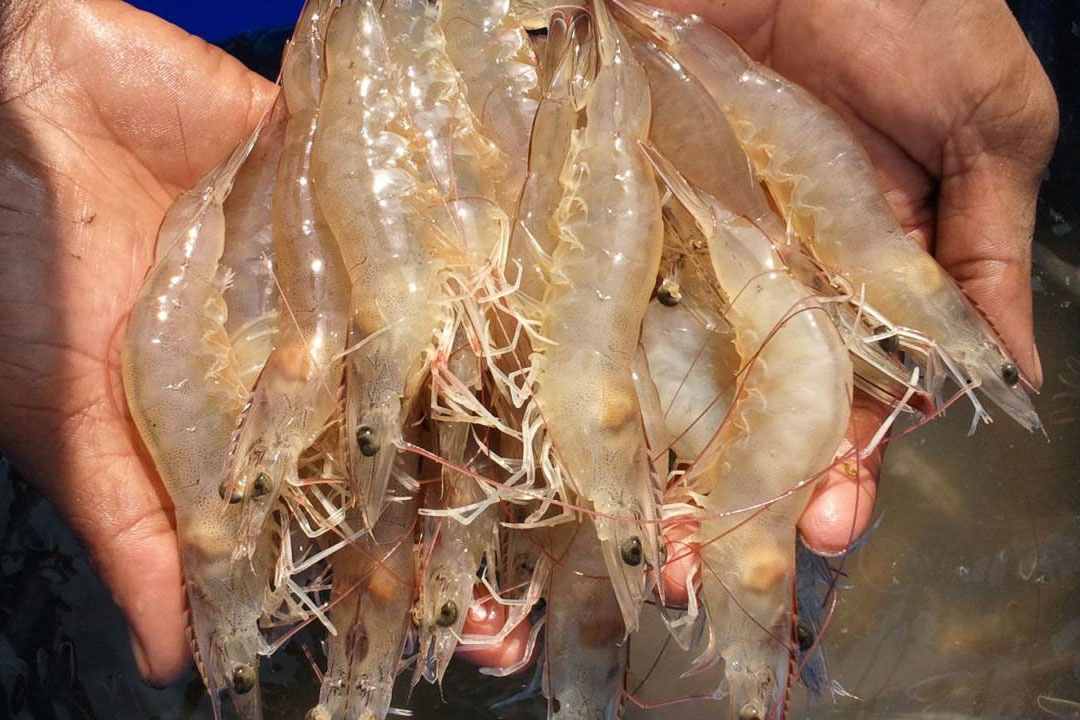
2019 is a challenging year for shrimp farming, due to the\r\nimpact of climate change, erratic weather, shrimp have to face long-lasting\r\nepidemics and increasingly complicated situations. Typically, WSSV (white\r\nspot syndrome virus), AHPND (acute hepatic necrosis disease) and micro-spore disease\r\n(EHP) many diseases have no definite cure, therefore, prevention is very\r\nimportant.
In addition, the abuse of antibiotics in aquaculture is an\r\nurgent issue that is concerned by authorities as well as\r\nconsumers. Because, not only is it harmful to the farming environment and\r\nthe quality of the adopted children, it also directly affects the health of\r\nconsumers. Therefore new alternative strategies are needed to promote the\r\ndevelopment of aquatic animals and to control pathogens.
Probiotics are a promising alternative to improve disease\r\nresistance and stimulate the growth of farmed shrimp
Research and apply\r\nprobiotic mixture to the growth of vannamei
Additional research of Lactobacillus pentosus pent6us\r\nBD6, Lac mixture. fermentum LW2, Saccharomyces cerevisiae P13 and Bacillus\r\nsubtilis E20 and individually supplement each microorganism within 56 days\r\nand monitor the growth. All treatments were then challenged with V.\r\nalginolyticus and monitored for mortality for 14 days.
- Treatment 1: Control without additional probiotics
- Treatment 2: L actobacillus pentosus BD6, Lac mixture . fermentum LW2, Saccharomyces\r\ncerevisiae P13 and Bacillus subtilis E20 with a concentration of\r\n107 cfu / kg feed
- Treatment 3: Treatment 2: Lactobacillus pentosus BD6, Lac mixture . fermentum LW2, Saccharomyces\r\ncerevisiae P13 and Bacillus subtilis E20 with a concentration of\r\n108 cfu / kg feed
- Treatment 4: Treatment 2: Lactobacillus pentosus BD6, Lac mixture . fermentum LW2, Saccharomyces\r\ncerevisiae P13 and Bacillus subtilis E20 with a concentration of\r\n109 cfu / kg feed
- Treatment 5: Lactobacillus pentosus BD6 with a\r\nconcentration of 109 cfu / kg of feed
- Treatment 6: Bacillus subtilis E20 with a\r\nconcentration of 109 cfu / kg of feed
- Treatment 7: Lac. fermentum LW2 with a\r\nconcentration of 109 cfu / kg feed
\r\n\r\n\r\n\r\n\r\n\r\n\r\n\r\n\r\n\r\n\r\n\r\n\r\n\r\n
- Treatment 8: Saccharomyces cerevisiae P13 with\r\nconcentration of 109 cfu / kg of feed
Result
After 56 days, the growth rate of treatment 2 with the\r\naddition of microorganisms at 10 8 cfu / kg feed and treatments 5\r\n(BD6) and 6 (E20) at 109 CFU/ kg feed improved significantly.\r\nThe growth rate and health status of shrimp were not significantly reduced,\r\nwhile the remaining treatments did not significantly affect shrimp growth.
There was no significant difference in carcass composition\r\nin the control group and other treatments. After 56 days from feeding,\r\nshrimp fed feed containing probiotic mixtures with concentrations of 10 7 ~\r\n10 9 cfu / kg feed and 10 9 cfu / kg feed of single\r\nprobiotics (except S. cerevisiae P13)\r\nsurvived higher after injecting V.\r\nalginolyticus than the control group.
Better disease resistance of shrimp in groups fed with\r\nprobiotics mix may be due to increased phenoloxidase activity, respiratory and\r\nlysozyme activity and increased ability of macrophages when exposed to\r\nbacteria. V. alginolyticus
\r\n\r\n\r\n\r\n\r\n\r\n\r\n\r\n\r\n\r\n\r\n\r\n\r\n\r\n\r\n\r\n\r\n\r\n\r\n\r\n\r\n\r\n\r\n\r\n\r\n\r\n\r\n\r\n\r\n\r\n\r\n\r\n\r\n\r\n\r\n\r\n\r\n\r\n
Results from the study found that supplementing with a\r\nmicrobiological mixture was more effective at improving the growth performance\r\nof shrimp compared to individual probiotics. Therefore, it is necessary to\r\nstudy the production of probiotics containing Lactobacillus pentosus BD6, Lac. fermentum LW2, Saccharomyces cerevisiae P13\r\nand Bacillus subtilis E20\r\nand recommended to use at a concentration of 108 CFU/kg of feed to\r\nstimulate growth, enhance resistance against pathogens.
Source: Tepbac

Ditulis oleh
Tim Minapoli
Kontributor
Pakar di bidang akuakultur dengan pengalaman lebih dari 15 tahun. Aktif berkontribusi dalam pengembangan industri perikanan Indonesia.