

A polyvalent vaccine can help to protect both tilapia\r\nbroodstock and their offspring from the effects of Streptococcus agalactiae,\r\naccording to a new study.Streptococcus agalactiae is one o...
A polyvalent vaccine can help to protect both tilapia\r\nbroodstock and their offspring from the effects of Streptococcus agalactiae,\r\naccording to a new study.
Streptococcus agalactiae is one of the most prevalent\r\nbacterial diseases affecting the global tilapia sector and a number of\r\ndifferent vaccines have been developed and have been shown to have varied\r\nlevels of efficacy. This new study aimed to examine the use of S.\r\nagalactiae polyvalent vaccine on tilapia broodstock and whether maternal\r\nimmunity and resistance to the pathogen could be passed on to their offspring.
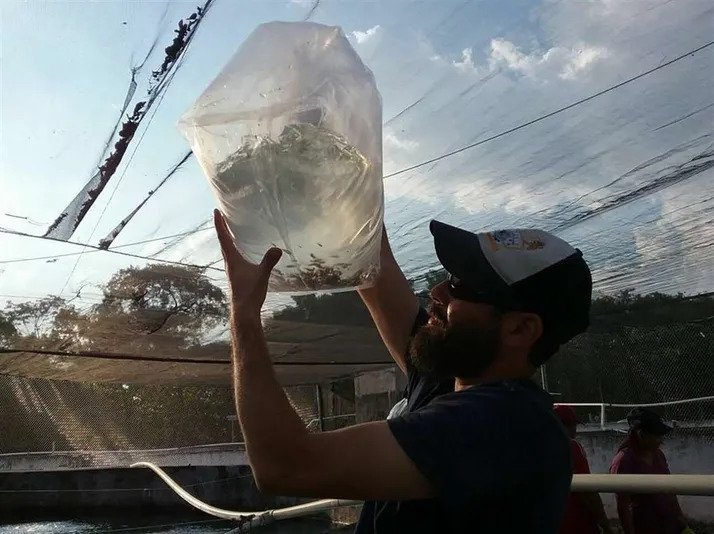
Offspring of vaccinated tilapia broodstock showed\r\nconsiderably higher survival rates when challenged with S. agalactiae
© Spring Genetics
The broodstock was injected with the vaccine at a dose of\r\n108 CFU per fish at second gonadal maturity until spawning. Challenge\r\ntests were carried out on the offspring at 5, 10, 15 and 20 days after hatching\r\nusing five different strains, both individually and in combination.
The researchers, who were mainly based at Nanjing Agricultural University,\r\nobserved immunological parameters in broodstock, eggs, and larvae and relative\r\npercent survival (RPS) of larvae after being challenged with pathogenic S.\r\nagalactiae. The results showed that the leukocytes, phagocytic activity,\r\nrespiratory burst, lysozyme activity and antibody levels of vaccinated\r\nbroodstock was at a higher level compared with unvaccinated broodstock.
The high level of the lysozyme activity, antibody levels\r\nand recombination activating gene 1 (RAG1) were also observed in eggs\r\nand larvae from vaccinated broodstock. Larvae produced from vaccinated\r\nbroodstock, when challenged with pathogenic S. agalactiae, had RPS values\r\nover 50 percent until 20 days after hatching.
\r\n\r\n\r\n\r\n\r\n\r\n\r\n\r\n\r\n\r\n\r\n\r\n\r\n\r\n
“In conclusion,” wrote the researchers in their\r\nabstract, “polyvalent vaccine of S. agalactiae administrated in the\r\nbroodstock could enhance immunity in the broodstock and protect their offspring\r\nfrom pathogenic S. agalactiae.”
Source: The Fish Site

Ditulis oleh
Tim Minapoli
Kontributor
Pakar di bidang akuakultur dengan pengalaman lebih dari 15 tahun. Aktif berkontribusi dalam pengembangan industri perikanan Indonesia.