

Seafood has blown past its iceberg lettuce stage and\r\nentered trendy greens territory, with eaters loading up on oceanic superfoods\r\nand falling in love with previously unknown species as fast as ...
Seafood has blown past its iceberg lettuce stage and\r\nentered trendy greens territory, with eaters loading up on oceanic superfoods\r\nand falling in love with previously unknown species as fast as daters swipe\r\nright. Even inland-dwelling locavores can easily satisfy their seafood\r\ncravings. What once was waste is now a premium snack, or maybe a wallet. We get\r\nthat farmed fish is good—in every sense of that word. Mystery fish are a thing\r\nof the past. Sustainability is a minimum standard, not a luxury.
Just two years ago, that’s what I\r\nthought the seafood world would look like in 2027. Back then,\r\nas I studied trends in consumer desires, seafood sustainability initiatives,\r\ntechnology and investment, I foresaw seven transformative changes happening\r\nwithin a decade.
At the time it seemed like I was surfing the edge of\r\nplausibility. But based on what I’ve learned from the 200 or so seafood\r\ninnovators entering the Fish 2.0\r\nnetwork over this past year, it’s all happening—in many cases\r\nmuch faster than I expected. And it’s happening all over the world.
So what does the future of seafood look like\r\ntoday?
Our palates are\r\ngetting schooled
I predicted more diverse seafood diets, and while lionfish\r\nis not (yet) the new kale, don’t be surprised to see it sitting atop a Caesar\r\nsalad in a few years.
People are looking beyond the shrimp-salmon-tuna triumvirate\r\nand learning to love the less familiar. Barramundi and cobia are going\r\nmainstream in some markets. Sustainable seafood purveyors are turning species\r\nthat used to get thrown away into high-end treats, and celebrity chefs are\r\nbuying invasive species (like that lionfish)\r\nand overlooked delicacies (like scampi caviar). At the same time, it’s getting\r\neasier to grow healthful, great-tasting salmon and other popular species in\r\nland-based farms, thanks to better feeds, disease prevention and production\r\nsystems.
It looks like we really will stop loving our favorite wild\r\nfish to death and become more adventurous seafood eaters.
We’re buying direct
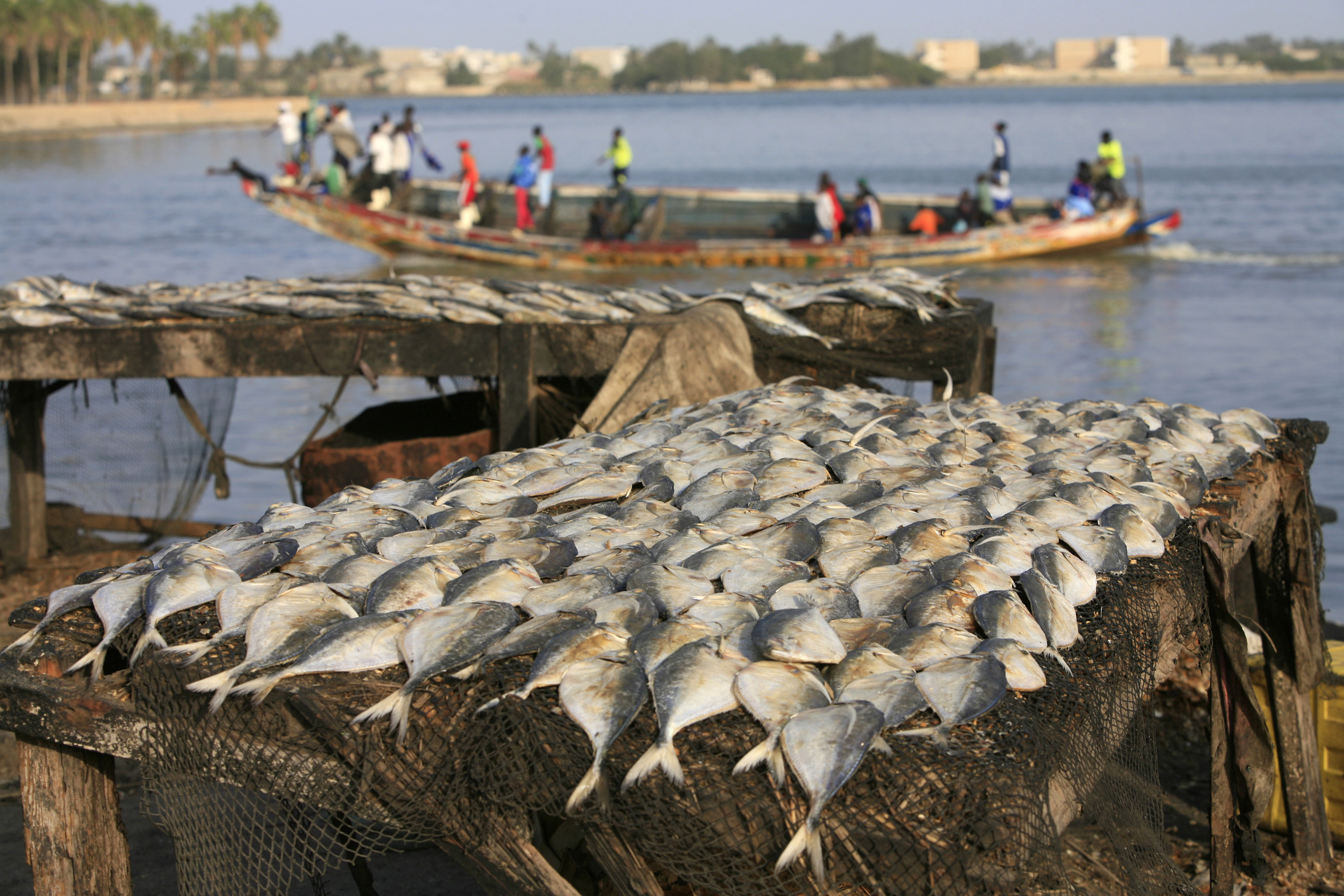
Local seafood still isn’t easy to come by for many of us,\r\nbut options for buying direct from fishers—near or far—are proliferating. The\r\nnumber of community-supported fisheries (seafood’s take on the farm-to-table\r\nmodel) on Local Catch has\r\nquadrupled since 2017, and some fishers are looking to copy Seattle’s Pike’s\r\nPlace fish market model. Even more are selling direct to restaurants and\r\nfishmongers in their home markets and overseas.
Fishers are finding that quality and diversity earn a\r\npremium. By selling boat- or farm-fresh seafood direct to chefs and market\r\nowners, they can earn three to six times the price distributors pay. And mobile\r\napps are making it fast and easy for those who provide top-notch seafood to\r\nconnect with those who want it. This trend is likely to grow as food packaging\r\nand preservation technologies continue to improve, making shipping cheaper. Big\r\npicture: sustainable seafood is reaching a broader market than ever, at prices\r\nthat reflect its value.
Mystery fish are so\r\nyesterday
So many startups are working on traceability\r\nand transparency challenges that there’s little doubt we’ll\r\nsoon know who caught a fish, where they caught it, how cold they kept it and\r\nmore. Mystery fish is well on its way to no longer being a thing, at least in\r\nregions where regulations are enforced.
The rise of seatech is speeding efforts to clear up\r\nseafood’s notoriously murky supply chain. Sensors, robotics, networked cameras\r\nand other technologies that operate in and out of the water are helping fishers\r\nand farmers collect and analyze real-time data, so they can catch and grow seafood\r\nin the best possible way. Labor\r\npractices are getting a dose of daylight too.
The questions today are not about whether we can collect\r\nessential data, but about who owns the data, how public it should be and which\r\ndatasets are most important. This is a huge leap forward.
Fish feed solutions\r\naccelerate
Right now, most farmed fish eat food made from wild forage\r\nfish. That’s not sustainable, which is why two years ago we were thrilled by\r\nthe mere existence of alternative fish feed ingredients. Now more\r\nsophisticated thinking about the problem is fueling\r\nsurprisingly fast progress.
Today it’s all about optimizing and scaling production. Many\r\ncompanies are turning black soldier flies into fish feed, and now they’re\r\nworking on genetics that make flies richer in omega 3s and function better as\r\nfeeds. Others have turned algae, grains and even industrial methane emissions\r\ninto nutritious fish feed ingredients, and they’re figuring out the best mix of\r\ningredients to grow each species.
This confluence of creative thinking means the fish feed\r\nproblem is likely to get solved sooner than we thought possible, and make an\r\neven bigger impact on the aquaculture industry.
Farmed fish are\r\nbig—and that’s a good thing
Speaking of aquaculture, I said farmed fish would fill out\r\nmore of our seafood plate, and they are. Aquaculture is growing at a clip\r\nof 5.8 percent a year and\r\naccounts for more than\r\nhalf the fish we eat.
Not all farmed fish are raised right, but they can be.\r\nSolutions to aquaculture’s sustainability challenges are heading to market. In\r\naddition to the fish feed problem, innovators are working on escape-proof ocean\r\nfarms, resource-efficient land farms, natural remedies for healthier fish,\r\ncapturing and upcycling fish farm waste, and more productive hatcheries. This\r\nis all good—we need sustainable fish farming to take the pressure off wild\r\nfisheries and meet global demand for clean protein.
There’s a war on\r\nwaste
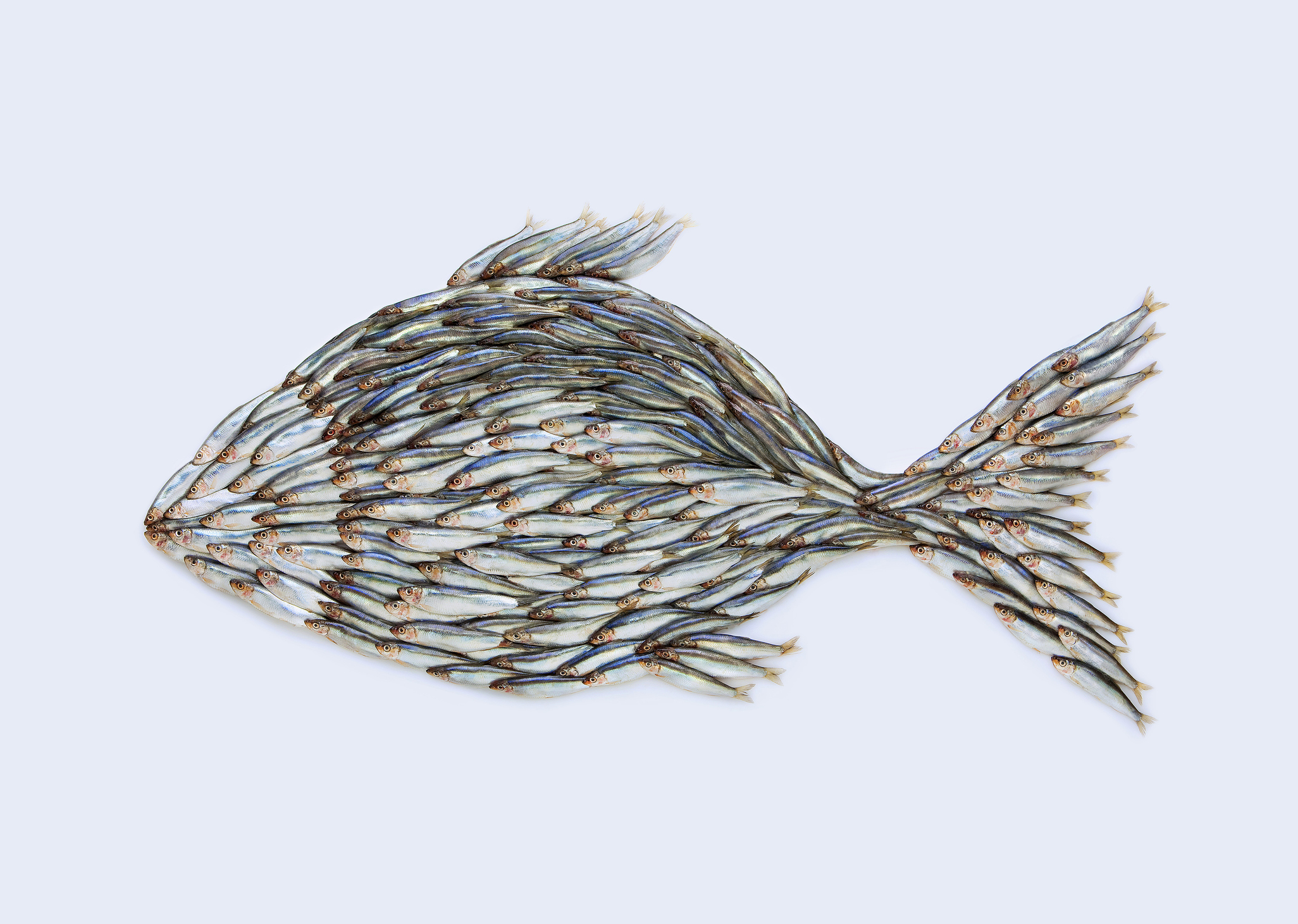
Turning waste into value was a niche in 2017. Now it’s one\r\npart of a broader campaign to crack down on waste at every point in the seafood\r\nsupply chain. Does throwing out heads, tails and bones really make sense?\r\nIncreasingly, the answer is no. New processing and preservation technologies\r\nallow higher yield from each fish, and people are taking a fresh look at “trash.”
Fish jerky from\r\nCalifornia whitefish offcuts is making a splash, as are bone broths made from\r\nseafood. In Australia,\r\nnew products like scampi caviar, honey bugs and GT shrimp (named by Aussies\r\nafter the car)—all recently discarded as bycatch—are yielding higher profits\r\nthan the traditional deep-water scampi catch. The challenge now shifts from\r\nreducing waste in these supply chains to making sure the full fisheries remain\r\nsustainable.
Sustainability is the\r\ntable stake
Over 90\r\npercent of large-scale, U.S.-based seafood buyers have committed\r\nto selling only sustainable products. They’re trying to pluck the junk from\r\ntheir supply chains—and they have plenty of work yet to do—so there’s no way\r\nthey’re buying something new that’s not sustainable. And the seafood itself is\r\njust the start of the conversation. Buyers want to know what a supplier is\r\ndoing about labor, packaging and resource use, and new products must beat the\r\nstatus quo to gain space on shelves and screens. Introducing an unsustainable\r\nseafood product to today’s marketplace would be like introducing a\r\npetroleum-powered Hummer to the current car market. We can’t claim victory on\r\nsustainability yet, but the tide truly has turned.
Change goes deeper\r\nand faster
What most surprises me about all this progress is not just\r\nhow fast it’s happening, but how people are redefining the problems. Instead of\r\nsimply creating different fish feeds, innovators are asking how we can cut the\r\namount of feed needed to grow each fish, make feeds more nutritious and breed\r\nfish that are light eaters or thrive on vegetarian diets. Instead of wondering\r\nwhether aquaculture can advance, they’re working on clearing bottlenecks around\r\nhatcheries, disease and genetics. Packaging waste was barely on the seafood\r\nworld’s radar two years ago; now it’s a prime target.
\r\n\r\n\r\n\r\n\r\n\r\n\r\n\r\n\r\n\r\n\r\n\r\n\r\n\r\n\r\n\r\n\r\n\r\n\r\n\r\n\r\n\r\n\r\n\r\n\r\n\r\n\r\n\r\n\r\n\r\n\r\n\r\n\r\n\r\n\r\n\r\n\r\n\r\n\r\n\r\n\r\n\r\n\r\n\r\n\r\n\r\n\r\n\r\n\r\n\r\n\r\n\r\n\r\n\r\n\r\n\r\n\r\n\r\n\r\n\r\n\r\n\r\n
This has a lot to do with the sheer number of talented\r\nentrepreneurs and investors entering the seafood sector. The more ideas and\r\ntechnologies we put in play, the more hits we’re going to have. It also has to\r\ndo with connections. I’m struck by how eager people are to work together\r\nregionally and across oceans and borders, once they get out of their caves and\r\nmeet each other. The entrepreneurs participating in Fish 2.0 are as interested\r\nin partnerships with other businesses as they are in investment. As these\r\npersonal networks pull together pieces of innovation bubbling up around the\r\nworld and more investors jump into the pool, the pace of change in seafood has\r\nmoved from a simmer to a rolling boil.
Source : Techcrunch.com

Ditulis oleh
Tim Minapoli
Kontributor
Pakar di bidang akuakultur dengan pengalaman lebih dari 15 tahun. Aktif berkontribusi dalam pengembangan industri perikanan Indonesia.