

The aquaculture industry is booming, it is the food industry\r\nof the future and it is not hard to see why. Being able to maximize the growth\r\nrate and select the best breeds of fish and other aqua...
The aquaculture industry is booming, it is the food industry\r\nof the future and it is not hard to see why. Being able to maximize the growth\r\nrate and select the best breeds of fish and other aquatic organisms is a huge\r\nbenefit. It is taking the world by storm and soon enough (some estimates say as\r\nearly as 2050) most of our seafood will come from aquaculture. In 1990\r\naquaculture only produced 20 million tonnes, in contrast, aquaculture in 2016\r\nproduced 130 million tonnes, and this trend is only expected to continue.\r\n With the industry on the rise and the Tilapia sector of that industry\r\npoised and primed to lead the charge it begs the question of what other uses\r\ncan aquaculture find rather than food?
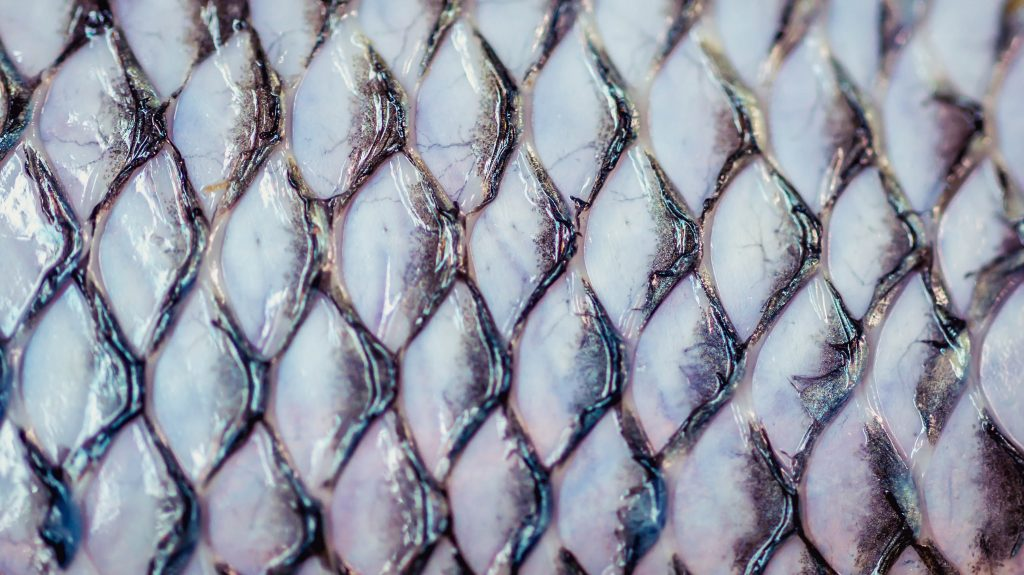
Naturally, Tilapia is an incredibly healthy product being extremely\r\nhigh in protein and vitamin B12 which is known to reduce the risks of many\r\ndiseases and health conditions. The marketers, suppliers, and producers should\r\nall focus on this fact more, something missed by us on the consumer end! The\r\nTilapia industry is leading the way in finding innovative methods and providing\r\nthe highest quality products, in recent years it has also started to lead the\r\nway into the medicinal sector. This is an unexploited market from most\r\naquaculture, the only other thing that comes close to it on a commercial scale\r\nis Cod oil and Omega-3 and Omega-6 supplements.
\r\n\r\nBurn Victims
\r\n\r\nBrazil is at the forefront of the new innovative methods in\r\nthe medical market with a revolutionary new treatment aimed at curing burn\r\nvictims. Dr. Marcelo Borges and his team have made a remarkable discovery that\r\nthe skin from tilapia is incredibly effective when it comes to xenografts:\r\nwhere the donor for a skin graft is of a different species to that of the\r\nrecipient. This is the main method of treatment when it comes to severe burns.\r\nFirst, let's cover why tilapia is so useful and then why you want to get\r\ninvolved.
\r\n\r\nXenografts are not uncommon, normally derived from bovine,\r\npigs and chickens, however, these terrestrial animals carry with them an innate\r\nrisk of disease transfer, whereas Tilapia being an aquatic animal has a far\r\nlower risk of carrying compatible diseases. Tilapia is incredibly useful for\r\nthis fact plus the structure is very similar to that of human skin and it has a\r\nvery high type 1 collagen content, two times the amount found in human skin.\r\nCollagen is a natural polymer used in pharmaceutical products and supplements\r\ndue to its ability to promote healing. The normal treatment used when a medical\r\nfacility doesn’t have access to grafts of any kind is to use gauze and\r\nbandaging, the problem with this is every 2 days the dressing needs to be\r\nchanged and this is often at the cost of great pain to the patient. Tilapia\r\nskin however only needs to be changed every 10 days minimum, and in a lot of\r\ncase studies, it was not changed at all. This due to its amazing ability to\r\nretain moisture for longer than any type of bandage and dressing, not only\r\nkeeping the wound sealed longer but also reducing the pain and suffering of the\r\npatients.
\r\n\r\nSo, we know that it eases the pain, we know that it promotes\r\nhealing, we know that it is anti-infectious and the final point about why\r\ntilapia is so good for burn treatments is that it costs 25% the normal price of\r\ngraft or polyurethane foam treatment. This is a massive step forward, especially\r\nin developing countries such as Brazil where this is proving to be such a huge\r\nsuccess. A place where not everyone can afford treatment or the necessary\r\nmaterials are not always present, tilapia can show up and become the savior to\r\nmany.
\r\n\r\nTherefore, you want to use your tilapia in projects just\r\nlike these. It is estimated that the use of tilapia skin in developing\r\ncountries could save 180,000 lives per year, so not is it only an incredible\r\npublic relations opportunity, but you are also making extra profit. Most of the\r\ntilapia that is grown is used to make frozen fillets that are shipped off to\r\nvarious countries, this means that mainly the skin and other collagen-rich\r\n“waste products” are just thrown away. With this being the case, you would not have\r\nto grow any more tilapia rather than just utilize what you consider to be the\r\nwaste products anyway and contribute to the local medical research and make\r\nmore money… this is a win-win situation. While at the moment, the demand for\r\ntilapia skin is not global, with the success and research rate in place it will\r\nnot belong. This industry is ready to undergo massive and rapid expansion.\r\nIt’d pay well to be next to the doors when they open.
\r\n\r\nOther uses
\r\n\r\n1. \r\nWhile tilapia skin is very good for burns it\r\nalso has a multitude of other uses.
\r\n\r\n2. \r\nMarine peptides from Tilapia have been combined\r\nwith a very hardy material called Chitosan (derived from chitin) to create a new\r\ntype of artificial bandage. In recent tests and experiments, this bandage type\r\nhas been shown to have anti-microbial properties and encourages cell\r\nproliferation and migration, speeding up the healing process by significant\r\nmargins.
\r\n\r\n3. \r\nOther researchers are showing how effective\r\ntilapia skin is in creating a scaffolding to encourage the grown of cells\r\naround various parts of the body. This has profound consequences for the\r\ntreatment of those with malformations.
\r\n\r\n4. \r\nLastly, type 1 collagen collected from tilapia\r\nskin cells have been shown to induce human stem cell differentiation into\r\nosteoblasts. These are the cells that make up the oral cavity. Not only does it\r\npromote growth but is two times better at attachment and the paper states that\r\ntilapia is “an underutilized resource, [which] holds promise as scaffolding the material in the application of tissue engineering in [the] dental field”.
\r\n\r\nConclusion
\r\n\r\nTo summarize, it would be well worth the while of producers\r\nto be well aware of the changing medical market and how tilapia-based products\r\nare the next big thing in line. Providing cheap, affordable and plentiful\r\nmedical needs to those who need it most would not only shine the political\r\nspotlight on the tilapia industry (providing free advertisement and exposure)\r\nbut also lends itself to successful advertisement campaigns and increased\r\nprofits from selling what is now regarded as “waste”.
Source: Tilapia Market

Ditulis oleh
Tim Minapoli
Kontributor
Pakar di bidang akuakultur dengan pengalaman lebih dari 15 tahun. Aktif berkontribusi dalam pengembangan industri perikanan Indonesia.