

The new test uses Australia’s national science agency’s\r\n‘Shrimp MultiPath’ technology, commercialized by Brisbane start-up\r\ncompany Genics,\r\nwhich spun-out of CSIRO to tackle the global ch...
The new test uses Australia’s national science agency’s\r\n‘Shrimp MultiPath’ technology, commercialized by Brisbane start-up\r\ncompany Genics,\r\nwhich spun-out of CSIRO to tackle the global challenge of food security and\r\nquality. It comes as the domestic prawn farming industry recovers from losses\r\nfrom pathogens over the last three years.
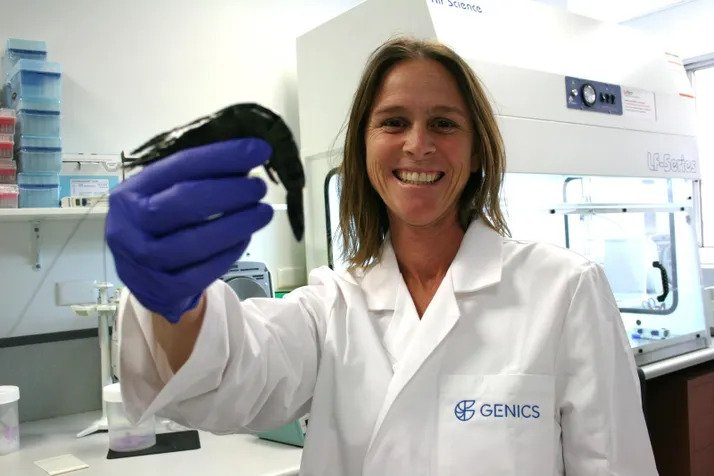
Dr. Melony Sellars, Genics CEO and former CSIRO scientist,\r\nsaid the technology comes at an opportune time for the domestic prawn farming\r\nindustry after losses from pathogens over the last three years © CSIRO
The technology can detect 13 commercially significant prawn\r\ndiseases, including white spot syndrome, which wiped out many prawn populations\r\nin 2016, and infectious hypodermal and hematopoietic necrosis virus (IHHNV).
According to CSIRO, trials to manage IHHNV using Shrimp\r\nMultiPath technology increased production by 3.7 tonnes per hectare, or $67,000\r\nfarm gate value. Consequently, a 50-hectare Australian prawn farm could see\r\ntheir revenues increase by more than $3 million per season.
Prawn farms are located across northern New South Wales and\r\nQueensland, with around 750 hectares of prawn ponds. An increase of 3.7 tonnes\r\nper hectare could boost the yield of farmed prawns by around 50 percent.
CSIRO chief executive Dr. Larry Marshall congratulated Genics\r\non translating breakthrough research into marketplace benefit.
“It’s great to see\r\nCSIRO science being accelerated out of the lab and into a start-up that could\r\ntackle our global food security challenge, a very clear public benefit,” Dr\r\nMarshall said.
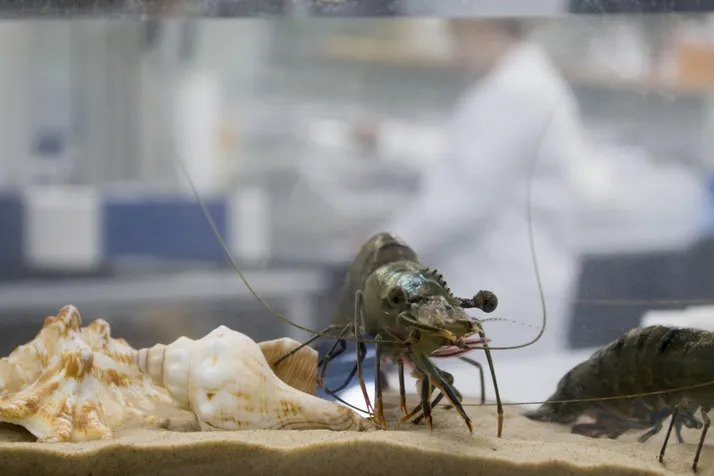
The new test can detect 13 significant pathogens including\r\nwhite spot and IHHNV © CSIRO
Genics CEO and former CSIRO scientist Dr. Melony Sellars said\r\nthe technology comes at an opportune time for the domestic prawn farming\r\nindustry, after losses from pathogens over the last three years.
“Our tests quickly help prawn farmers make informed\r\nmanagement decisions, and for consumers this means more, high quality, locally\r\ngrown Australian prawns.”
Australia consumes all of its domestically produced prawns,\r\nand foreign imports are required to meet the shortfall in consumer demand.
Dr. Sellars said the tests will allow farmers to better\r\nmanage their prawn stocks as they grow, helping them to minimize stock losses\r\nand significantly boost their production levels, which could reduce Australia’s\r\nreliance on imported prawns.
Three years ago the southeast Queensland prawn industry –\r\nresponsible for around 40 percent of Australia’s farmed prawns – was shut down\r\nby the foreign incursion of white spot syndrome virus, a pathogen that is\r\nharmless to humans but lethal to prawns.
“Shrimp MultiPath tests against the white spot, as well as other\r\ninternational pathogens that we don’t currently have in Australia,” Dr. Sellars\r\nsaid.
\r\n\r\n\r\n\r\n\r\n\r\n\r\n\r\n\r\n\r\n\r\n\r\n\r\n\r\n\r\n\r\n\r\n\r\n\r\n\r\n\r\n\r\n\r\n\r\n\r\n\r\n\r\n\r\n
“This technology can also be used as a detection system by\r\nbiosecurity agencies to prevent the spread of any potential future incursions\r\nthat could harm our industry.”
Source: The Fish Site

Ditulis oleh
Tim Minapoli
Kontributor
Pakar di bidang akuakultur dengan pengalaman lebih dari 15 tahun. Aktif berkontribusi dalam pengembangan industri perikanan Indonesia.