

Swedish Algae Factory Co-founder Sofie Allert (above) and\r\nAngela Wulff began a research project studying algae that thrive in cold, dark\r\nclimates and found a particular strain that was thriving ...
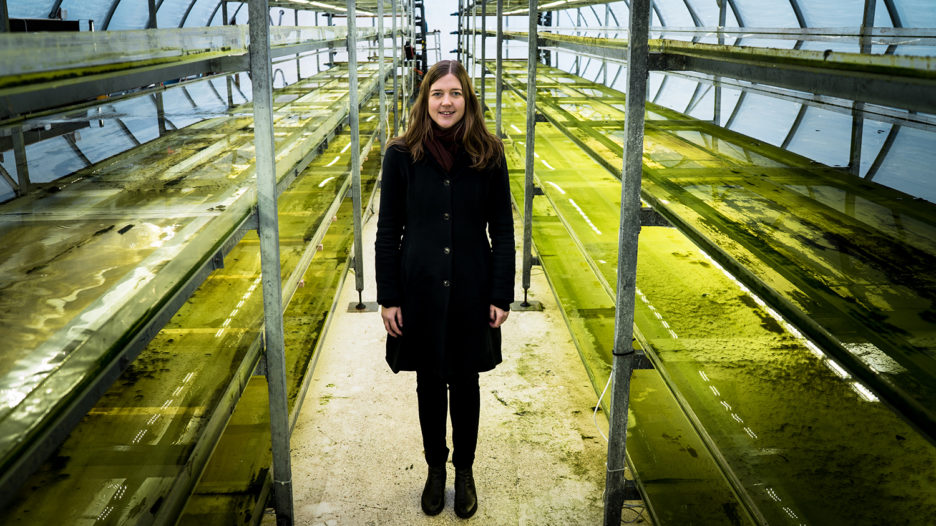
Swedish Algae Factory Co-founder Sofie Allert (above) and\r\nAngela Wulff began a research project studying algae that thrive in cold, dark\r\nclimates and found a particular strain that was thriving in Sweden. Photos\r\ncourtesy of Swedish Algae Factory.
Swedish Algae Factory (SAF), a Gothenburg, Sweden-based\r\ncompany, is using effluent water to harvest an algae with multiple uses and\r\ndiverse revenue streams. In demand by the personal care, solar industry and as\r\nan ingredient for fish feed and fertilizer, the company’s high-value product,\r\nAlgica, is created from the nutrients exiting recirculating aquaculture systems\r\n(RAS).
SAFs latest round of funding raised €5 million, a large\r\nportion of which came from Aqua-Spark, the investment fund for sustainable\r\naquaculture. This investment will allow SAF to build a large-scale algae\r\nfactory in Europe to further its research and development of Algica.
Co-founders Sofie Allert and Angela Wulff met at the\r\nChalmers School of Technology in 2014. Allert, the 29-year-old CEO of SAF,\r\nstudied biotechnology and was interested in growing algae in Sweden, while\r\nWulff, a part-time professor, had studied algae thriving under the ice in the\r\nAntarctic. The pair began a research project studying algae that thrive in\r\ncold, dark climates and found a particular strain that was thriving in Sweden.
Their goal was to have that algae utilize otherwise-wasted\r\nnutrients in fish manure to create a product that was climate positive and\r\nenvironmentally friendly. When they were approached by Smogenlax, Sweden’s only\r\nsaltwater, land-based fish farm, they realized they had the perfect opportunity\r\nto create a pilot algae farm, growing algae by using nutrients in the effluent\r\nwater from the RAS facility before that water entered wastewater treatment.
“We understood that this would be good for us and Smogenlax,\r\nso we agreed not to talk, but instead to start testing,” Allert said. “We built\r\na 24-square-meter greenhouse close to the farm and a system wherein the fish\r\nfarm effluent water flowed through our algae cultivation before it entered\r\nwastewater treatment, so we could filter out the nutrients and make use of\r\nthem.”
Over the next two years the two entrepreneurs learned that\r\ndifferent parts of the algae were useful to various industries. Algica, the\r\nsilica shell of the algae, has value as an ingredient in the personal care\r\nindustry, while its light manipulating properties can enhance the efficiency of\r\nsolar panels up to 4 percent. Inside that silica shell is a biomass rich in\r\nomega-3 fatty acids, carbohydrates and proteins that can be used as fish feed\r\nand fertilizer.
The algae doubles itself daily and right now its harvesting\r\nprocess takes up to two weeks. With their investment funding Allert and Wulff\r\nare planning the construction of a larger facility on a bigger fish farm that\r\nwill enable them to increase their annual Algica production from 30 kg to 1\r\nton.
“Algica is very porous so density is very low,” Allert said.\r\n“You need 0.02 grams of Algica per square meter of solar panels, while in\r\npersonal care products you use 0.1 grams of Algica per 100 mL of formula.”\r\nAlgica is sold by the gram, while its fish feed or fertilizer byproduct is sold\r\nper kilo.
More testing is required before Algica can be used in the\r\nsolar panel industry, but Swedish Algae Factory is already supplying Algica to\r\nsmall- and medium-size customers in the personal care industry in Sweden,\r\nFinland and South Korea. “The Algica will be our biggest source of revenue and\r\nby selling it to personal care and solar clients we can sell its byproduct as\r\nfish feed and fertilizer,” she said.
“The main demand for Algica right now is in personal care\r\nproducts but I think once the solar panel testing is completed we will be\r\nselling to personal care and solar industries equally. The material we’re\r\nproducing for both is the same, so we won’t need to modify our production, and\r\nwill be able to supply both industries from the same farm.”
The new algae factory will cost €4 to €5 million and Allert\r\nsaid there are a few site options under discussion.
“The fish farmers we’re talking to are happy to have us on\r\nsite because we help them lower the cost of their effluent treatment,” she\r\nsaid. She is hopeful the factory will be ready by December 2021 and anticipates\r\nrapid expansion with new algae factories on other fish farms.
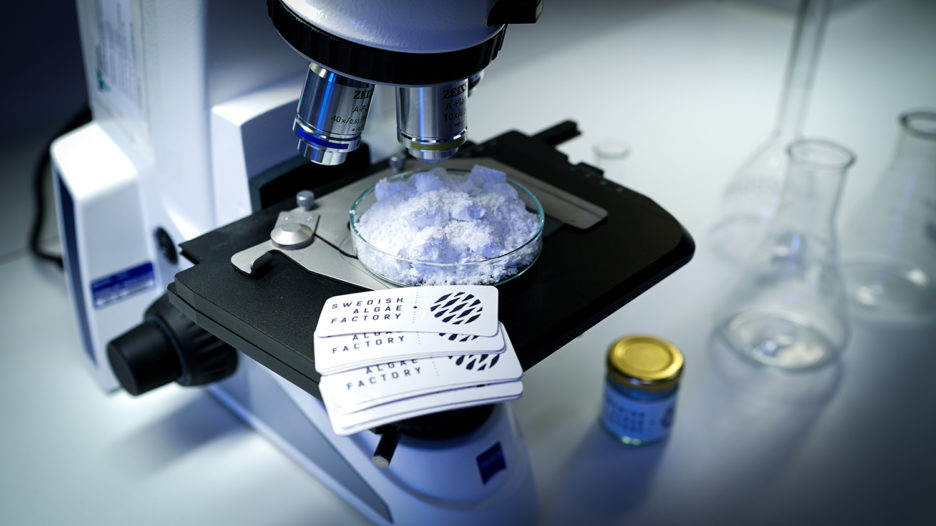
The Algica product is created from the nutrients exiting\r\nrecirculating aquaculture systems.
The expansion possibilities are thanks to an additional €2.2\r\nmillion the company received in grant funding from the European Union and the\r\nSwedish Energy Agency, and the €500,000 it won in the Postcode Lotteries Green\r\nChallenge last year.
Mike Velings, co-founder of Aqua-Spark, said he was\r\nimpressed by how SAF is solving a major issue for land-based aquaculture and\r\nsustaining a separate, diversified business model: “We are really excited about\r\nthis fully female-founded company and the algae they are growing and we think\r\nit has great potential,” he said.
“SAF is creating a really good solution, using run-off from\r\nfish farming operations and turning it into a valuable product. We love the\r\ncircular approach because it shows how you can do more with the systems the\r\naquaculture industry is building across the globe. We think algae can be a much\r\nbigger part of the future than it is now. For today, we’ve just scratched the\r\nsurface, but we hope to get a better understanding over time.”
The company has made heady progress since its 2016 inception\r\nand Allert said that can be daunting at times.
\r\n\r\n\r\n\r\n\r\n\r\n\r\n\r\n\r\n\r\n\r\n\r\n\r\n\r\n\r\n\r\n\r\n\r\n\r\n\r\n\r\n\r\n\r\n\r\n\r\n\r\n\r\n\r\n\r\n\r\n\r\n\r\n\r\n\r\n\r\n\r\n
“What drives me, though, is making a positive impact in the\r\nworld, and my way of doing that is through algae,” he said. “I’m grateful and\r\nhappy to have people around me that believe in our vision: to use alga to\r\ncreate a positive impact in the world.”
Source: Global Aquaculture Alliance

Ditulis oleh
Tim Minapoli
Kontributor
Pakar di bidang akuakultur dengan pengalaman lebih dari 15 tahun. Aktif berkontribusi dalam pengembangan industri perikanan Indonesia.