

White feces syndrome (WFS) is a common disease in brackish\r\nshrimp culture. Pathogens that attack the pancreas lead to problems with\r\ndigestion and food absorption, so improving the health st...
White feces syndrome (WFS) is a common disease in brackish\r\nshrimp culture. Pathogens that attack the pancreas lead to problems with\r\ndigestion and food absorption, so improving the health status of the\r\nhepatopancreas is the key to managing white fecal disease. Based on\r\nresearch and fieldwork, a team from India introduced five herbs that can\r\nprevent and treat white feces in shrimp: lemon, garlic, ginger, jaggery, tofu\r\nten. All of the above herbs have the ability to protect the liver, promote\r\ngrowth, prevent oxidation and interfere with the metabolism of bacteria and\r\nparasites in shrimp ponds.
Lime (Citrus limon)

Lime ( Citrus limon )
Citrus limon contains vitamin C and potassium, lemon\r\njuice is resistant to bacteria, prevent oxidation and infection.
Combining lemon juice with food can promote the digestion\r\nand absorption of nutrients from shrimp and shrimp. The chemical compounds\r\nin the composition of lemon prevent the breakdown of toxins in the intestine of\r\nshrimp to prevent absorption of toxins and transport to the\r\nhepatopancreas. The acetic acid in lemons can destroy pathogen cell\r\nmembranes, causing cell damage thereby inhibiting the growth of\r\npathogens. In addition, the flavonoids and tannins in lemons inhibit the\r\ngrowth of Enterocytozoon hepatopanaei (EHP).
Method of use: 50 ml of lemon juice mixed with 1 kg of\r\nfeed. Let dry for 30 minutes in low light before feeding.
Garlic ( Allium sativum )

Garlic is not only rich in vitamins B1, B2, B3, B6, folate,\r\nvitamin C, calcium, iron, magnesium, manganese, phosphor, potassium, sodium,\r\nzinc ... but also against many viruses, bacteria, fungi and parasites. Thanks\r\nto active ingredients like alliin, ahoin, allicin and allistain. Old\r\ngarlic extract also has antibacterial and liver protective effects in\r\nshrimp.
Method of use: 20g of crushed garlic is mixed with 50\r\nml of food binder, then mixed with 1 kg of feed. Let dry for 30 minutes in\r\nlow light before feeding.
Ginger ( Zingiber officinale )

Ginger (Zingiber officinale)
Ginger is a familiar herb frequently used to aid digestion,\r\nreduce nausea, prevent the flu and the common cold. Ginger has been shown\r\nto be effective in controlling bacterial, viral, fungal and parasitic diseases\r\nin aquaculture thanks to its antibacterial, anti-oxidant, growth-promoting and\r\nimmune-stimulating effects. with pets.
The phenolic compounds in ginger help reduce\r\ngastrointestinal (GI) stimulation caused by WFS, stimulate bile production,\r\ninhibit stomach contractions when food and fluids move through the intestinal\r\ntract in shrimp. At the same time, ginger also affects the digestive\r\nenzymes of shrimp and increases the activity of the digestive system. This\r\nsuggests that ginger can help prevent and control the impact of WFS in the\r\nshrimp digestive system.
Method of use: 20g of crushed ginger is mixed with 50\r\nml of food binder, then mixed with 1 kg of feed. Let dry for 30 minutes in\r\nlow light before feeding.
Sugar from Jaggery ( Borassus flabellifer )
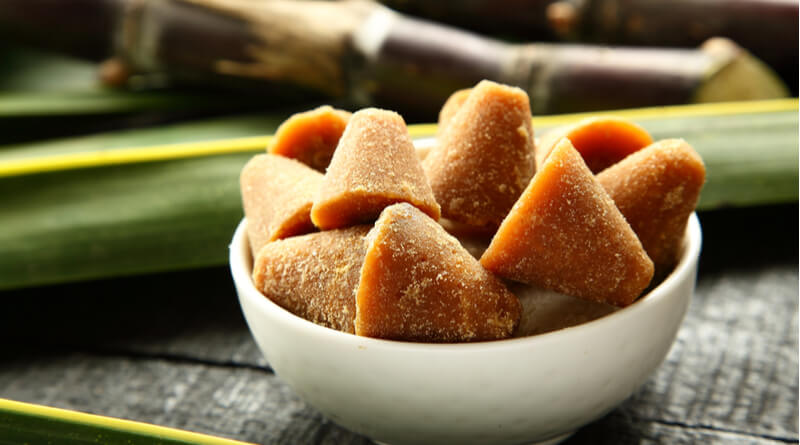
Jaggery
Jaggery is made from the water harvested by jaggery pickers\r\nusing a knife to cut the tops of the jaggery. The traditional process of\r\nmaking jaggery will not be affected by chemical agents, thus can retain all\r\nnatural mineral salts. Nutrition components of palm sugar include fat\r\nprotein, carbohydrates, vitamin C, minerals (phosphor, iron, nicotinic acid,\r\nvitamin B1, riboflavin ...). Jaggery activates digestive enzymes and\r\ngastric functions, thereby speeding up the digestion, smoothing the process,\r\nand ultimately reducing stress on the digestive system.
Jaggery also works to clean the hepatopancreas by removing harmful\r\ntoxins from the shrimp body. In addition, jaggery also contains\r\nantioxidants and minerals like zinc and selenium, which help prevent free\r\nradicals, enhance resistance to shrimp against WFS infection.
Method of use: Mix 1 kg of jaggery powder into 1 liter\r\nof water, bring to a boil until dissolved. Leave to cool, use 30 ml of the\r\nmixture of jaggery and 1 kg of feed. Let dry for 15 minutes in low light\r\nbefore feeding.
Tofu ( Vigna mungo )
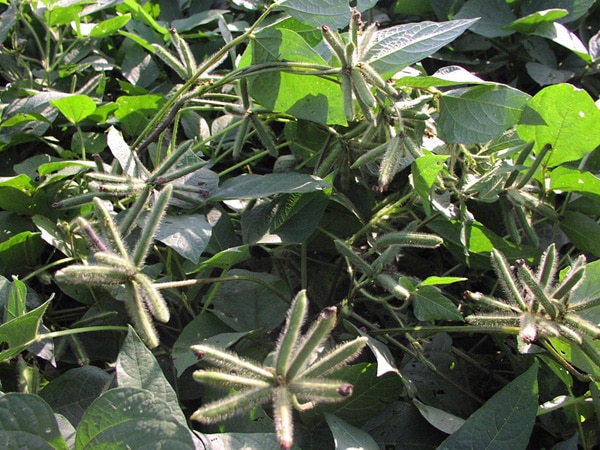
Tofu ( Vigna mungo )
Tofu or four-season mung beans, edible bean sprouts ( Vigna\r\nmungo ) are plants of the Beans family grown in South Asia. In\r\nVietnam, ten beans grow on upland areas like Lao Cai and are also grown in many\r\nplaces.
Like other legumes, ten beans are rich in fiber that can\r\nhelp improve digestion. The compounds in tofu include flavonoids,\r\nalkaloids, glycosides, phenolics, saponins, tannins and vitexin that help with\r\nantioxidants, support liver and neurodegenerative problems.
With abundant biological activity, amino acids and other\r\nminerals, tofu has a stimulating effect on growth, acts as an antioxidant,\r\nprotects the liver and controls WFS in farmed shrimp.
\r\n\r\n\r\n\r\n\r\n\r\n\r\n\r\n\r\n\r\n\r\n\r\n\r\n\r\n\r\n\r\n\r\n\r\n\r\n\r\n\r\n\r\n\r\n\r\n\r\n\r\n\r\n\r\n\r\n\r\n\r\n\r\n\r\n\r\n\r\n\r\n\r\n\r\n\r\n\r\n\r\n\r\n\r\n\r\n\r\n\r\n\r\n\r\n\r\n\r\n\r\n\r\n\r\n\r\n\r\n\r\n\r\n\r\n
Method of use: Grind 50 g of ten beans with 30 ml of\r\nfood binder, then mix with 1 kg of feed. Let dry for 30 minutes before\r\nfeeding.
Source : tepbac

Ditulis oleh
Tim Minapoli
Kontributor
Pakar di bidang akuakultur dengan pengalaman lebih dari 15 tahun. Aktif berkontribusi dalam pengembangan industri perikanan Indonesia.