

A recent study has shown that sodium alginate is a natural\r\nand a safe immune stimulant for grouper.Grouper ( Epinephelus coioides ) is one of the\r\nhigh economic value marine fish, delic...
A recent study has shown that sodium alginate is a natural\r\nand a safe immune stimulant for grouper.
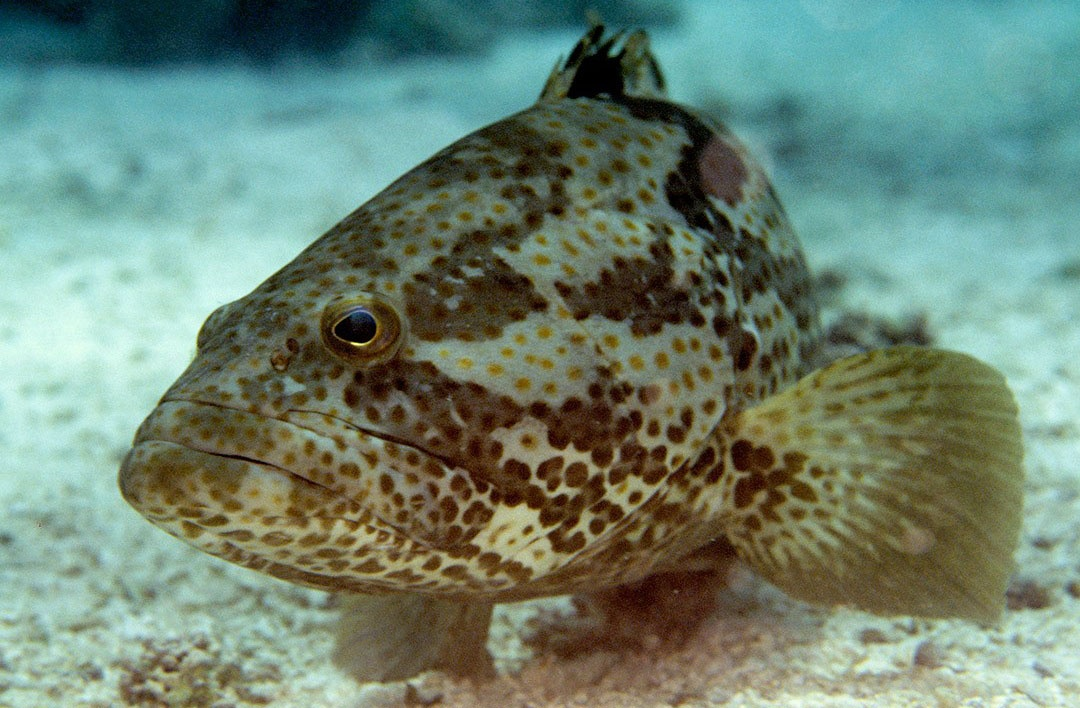
Grouper ( Epinephelus coioides ) is one of the\r\nhigh economic value marine fish, delicious meat, they are grown popularly in\r\nAsian countries such as China, Japan, Malaysia, Singapore, Thailand. In\r\nVietnam, they are being raised mainly in provinces and cities: Quang Ninh, Hai\r\nPhong, Nghe An, Hue, Khanh Hoa, Ba Ria - Vung Tau ... There are only a few\r\nmodels of fish farming in earthen ponds, the rest are raised in cages.
Currently, in our country domestic demand and grouper exports\r\nare relatively high, so grouper in the wild is being\r\noverfished. Therefore, rearing is increasingly being promoted by many\r\nforms of intensive and semi-intensive farming. However, the development of\r\na rapid farming model has led to an increase in the number of deadly fish\r\ndiseases with a high loss rate.
Common diseases in marine fishes are diseases caused by\r\nparasites, viruses, and bacteria. In which, hemorrhagic septicemia in fish\r\ncaused by bacteria, Photobacterium sp. is a dangerous agent,\r\ncausing mortality of about 80% in farmed fish. P. damselae bacteria can\r\nattack and cause disease in marine fish farmed at all stages of fish\r\ndevelopment, from larval stages, fingerlings to grow-out fish. When sick,\r\nthe fish can manifest in the chronic and acute form, manifestation of\r\npasteurellosis such as ulceration on the skin, the appearance of white cream\r\nnodules or white tubercules granulomas in some internal organs, causing\r\nvisceral necrosis, concentrated in the kidneys and spleen, causing widespread\r\ninfection and necrosis (Evelyn, 1996, Romalde, 2002; Bames et al.,\r\n2005). Diseased fish can die after 5-10 days causing economic losses in\r\ncountries like Japan, USA, France, Spain, Greece and Turkey. In Vietnam,\r\nthe disease is distributed in almost all farming areas across the country.
Currently, marine fish farmers mainly use antibiotics in\r\ntreating diseases. To minimize antibiotic use, research is needed on\r\nimmunosuppressive products. Sodium alginate is the sodium salt of alginic\r\nacid extracted from the cell walls of marine algae especially brown\r\nalgae.
Many studies of alginic acid supplementation in the diet\r\nhave yielded high results, typically in the diet of young tilapia (Oreochromis\r\nniloticus) , showing the improvement of the health and intestinal tract of\r\nfish and copper. Supplementation of alginic acid in juvenile salmon also showed\r\ngrowth and enhanced innate immune responses. The 4g alginic acid/kg\r\nsupplement for sturgeon also contributes to the growth and immune efficiency in the\r\nfish. In addition, the sodium alginate extracted from brown algae has\r\nstimulated the strengthening of non-specific carp defenses against Edwardsiella\r\ntarda (Fujiki, Matsuyama, & Yano, 1994).
Research on\r\napplication of sodium alginate in grouper
Grouper fed a diet containing sodium alginate at 0 (control,\r\nnamed C) and 1.0 g / kg (named S) at 28 ° C (two groups named C- 28 and S-28)\r\nand 20 ° C (two groups named C-20 and S-20) for 12 days and then challenged\r\nwith Photobacterium damselae.
Result
At the end of the experiment, supplemental treatment of\r\nsodium alginate S-28 showed that lysozyme activity, phagocytic activity,\r\nsuperoxide effuse and respiratory activity were higher than C-28 and S-20 and\r\nachieved the lowest value is the C-20 group.
The sodium alginate supplementation treatments showed that\r\nthe stress index, cortisol, glucose, and glucose levels in serum were\r\nsignificantly lower than the non-supplemented treatment, the sodium alginate\r\nsupplementation S28 had a lower stress index. compared to group C28 and reached\r\nthe highest stress value in group C20.
Grouper cultured at 28 ° C was more susceptible to Photobacterium\r\ndamsela than at 20 ° C. Fish after challenge with P.\r\ndamselae showed the survival rate of the S20 group reached the highest\r\nvalue of 100% after 144 hours, while C-20 and S-28 groups reached 70.0% and\r\n56.7% and the lowest was the C-28 treatment with 30.0% survival.
Our results show that the use of sodium alginate in the diet\r\nhas been shown to reduce stress levels, enhance immunity against pathogens\r\ncaused by the bacteria Photobacterium damselae .
\r\n\r\n\r\n\r\n\r\n\r\n\r\n\r\n\r\n\r\n\r\n\r\n\r\n\r\n\r\n\r\n\r\n\r\n\r\n\r\n\r\n\r\n\r\n\r\n\r\n\r\n
The study found that sodium alginate should be added to a diet of grouper cultured at 28 ° C to limit susceptibility to Photobacterium\r\ndamselae. The results of the study serve as a scientific basis for further\r\nstudies to contribute to better disease management in grouper/cage culture in\r\nprovinces in particular and in Vietnam in general.
Source: Tepbac

Ditulis oleh
Tim Minapoli
Kontributor
Pakar di bidang akuakultur dengan pengalaman lebih dari 15 tahun. Aktif berkontribusi dalam pengembangan industri perikanan Indonesia.