

A new study published in Nature – Scientific\r\nReports find that supplementing aquafeed with Gracilaria\r\ngracilis aqueous extract (GRA) enhanced the immune function and\r\nantioxidant capacity of E...
A new study published in Nature – Scientific\r\nReports find that supplementing aquafeed with Gracilaria\r\ngracilis aqueous extract (GRA) enhanced the immune function and\r\nantioxidant capacity of European seabass. Researchers also concluded that GRA\r\nextract slowed the progression of photobacteriosis infections (Phdp) – making\r\nthe fish more resistant to the disease.
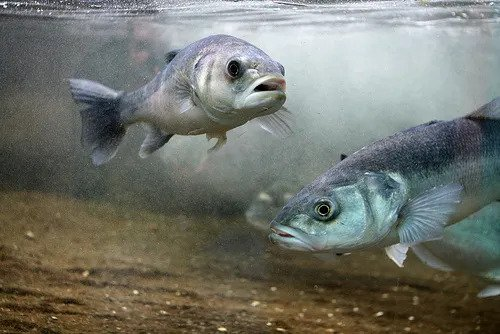
Seabass aquaculture is becoming more popular, but faces\r\nsignificant challenges from bacterial diseases
The researchers found no difference in the feed intake or\r\nweight between experimental and control groups in the trial. This indicates\r\nthat GRA supplementation could be economically viable and welfare-friendly\r\nmethod of boosting seabass immunity without increasing production costs.
Background
Though European seabass aquaculture is gaining in popularity\r\nand profitability, the industry faces significant challenges from bacterial\r\ninfections. One of the more common infections is Photobacterium damselae subspecies piscicida\r\n(Phdp), the causative agent for photobacteriosis. Phdp induces septicemia in\r\nyoung fish and causes massive economic losses from mortalities.
Producers usually rely on prevention instead of treating\r\nPhdp outbreaks – it’s more cost-effective to boost fish immunity with\r\nsupplements instead of vaccinating entire fishponds. Administering supplements\r\nis also better for the overall welfare. Delivering immunostimulants through\r\naquafeed means that producers won’t disrupt the surrounding environment or\r\ncause handling-related stress.
Nutritional research suggests red seaweeds like Gracilaria\r\ngracilis contain polysaccharides that boost fish immunity and slow\r\nbacterial growth. There is also evidence that G. gracilis aqueous\r\nextract (GRA) acts as a prebiotic in zebrafish (Danio rerio). However, the\r\nliterature hasn’t established if GRA supplementation is a useful\r\nimmunostimulant for European seabass.
The study
The researchers wanted to evaluate the effect of GRA in\r\nseabass infected with photobacteriosis. More specifically, they wanted to\r\nmeasure how GRA supplementation affected seabass survival rates and immune\r\nresponse after exposure to Phdp.
Young seabass were used to test the efficacy of GRA extract
The researchers began by sourcing seabass fingerlings and\r\nacclimating them to experimental tanks for two weeks. During this period, the\r\nfish were weighed and fed the same control diet. When the experimental period\r\nbegan, the researchers distributed the fish into eight circular tanks that were\r\nconnected to a closed seawater RAS, putting 30 individuals into each tank. Four\r\ntanks were fed the experimental diet (control + 5 percent GRA extract) and four\r\nremained on the control feed. The seabass was tracked for 80 days.
After the observation period, four tanks of fingerlings were\r\nexperimentally infected with Phdp by injection (two on the control diet, two on\r\nthe experimental feed). Two tanks were given a placebo injection (one on the\r\ncontrol diet and another on the experimental diet). The remaining fish were\r\nused as true controls (control diet and no handling for injections). The tanks\r\nwere taken off the RAS to prevent cross-contamination.
The researchers monitored the seabass for seven days after\r\ninjection. They recorded feed intake and any mortalities. Kidney samples from\r\nthe infected fish were collected and examined. The fish were monitored for an\r\nadditional three days before the experiment concluded.
Results
During the first 80 days of the experiment, the seabass\r\nshowed no differences in body weight or feed intake. Post-infection however,\r\nthe groups differed significantly. Seabass that had not been exposed to Phdp\r\nhad no mortalities and showed no chemical stress response to the experimental\r\nenvironment.
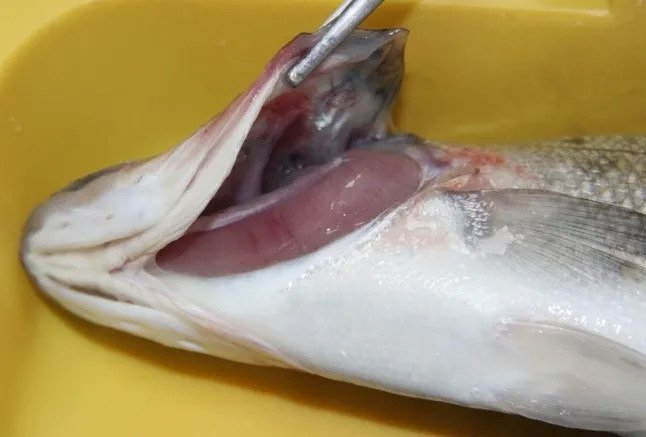
Mortalities were observed on the first day in the control\r\ngroup © Medaid
Fish that were subjected to the disease challenge started\r\nsuccumbing to the infection between one to seven days after exposure. However,\r\nseabass fed the GRA-supplemented diet showed better survivability than those\r\nfed the control diet. Fish on the control diet succumbed on the first day after\r\nexposure whereas it took three days for seabass in the GRA group to become\r\nsymptomatic and die.
Based on organ and tissue analysis of the seabass fed the\r\nexperimental diet, researchers concluded that GRA had a de-toxifying effect and\r\nhelped degrade Phdp bacteria. They also concluded that the fish on the\r\nexperimental diet had a greater ability to cope with the biological stress of\r\ninfection when compared to the control group.
Key take-aways
\r\n\r\n\r\n\r\n\r\n\r\n\r\n\r\n\r\n\r\n\r\n\r\n\r\n\r\n\r\n\r\n\r\n\r\n\r\n\r\n\r\n\r\n\r\n\r\n\r\n\r\n\r\n\r\n\r\n\r\n\r\n\r\n\r\n\r\n\r\n\r\n\r\n\r\n\r\n\r\n\r\n\r\n
This study provides further evidence of the relationship\r\nbetween diet and immunity in European seabass – usually, improving feed and\r\nnutrition quality results in enhanced immune function and a greater ability to\r\nresist infection. The results also show that GRA supplementation is effective\r\nand economically feasible for producers.
Source: The Fish Site

Ditulis oleh
Tim Minapoli
Kontributor
Pakar di bidang akuakultur dengan pengalaman lebih dari 15 tahun. Aktif berkontribusi dalam pengembangan industri perikanan Indonesia.