

Seagrass debris has the potential to improve the culture of\r\nsea cucumbers, according to new research.Scientists from the University\r\nof Algarve’s Centro do Ciências do Mar (CCMAR), investiga...
Seagrass debris has the potential to improve the culture of\r\nsea cucumbers, according to new research.
Scientists from the University\r\nof Algarve’s Centro do Ciências do Mar (CCMAR), investigated the use of\r\ndebris from two different species of seagrass – Zostera noltii and Cymodocea\r\nnodosa – as food sources for broodstock of the sea cucumber species Holothuria\r\narguinensis during breeding periods.
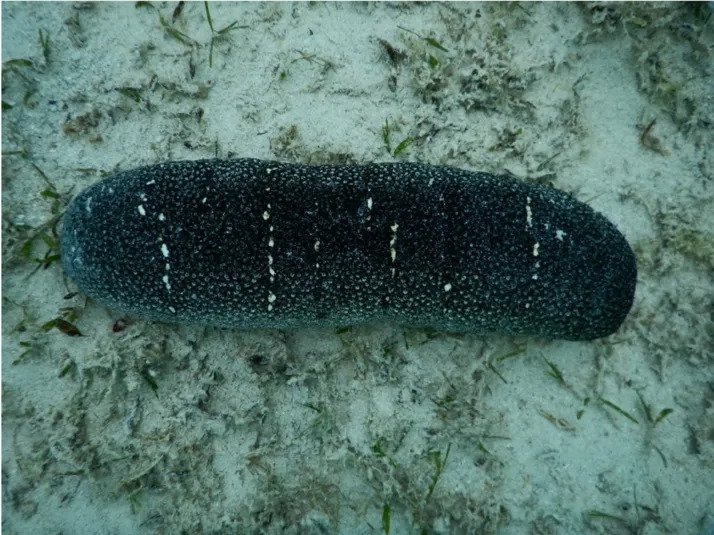
One of the two seagrass species investigated proved to be a\r\nsuitable food for European sea cucumbers
© SAMS
The work was undertaken due to address a key gap in the\r\nknowledge of the culture of this species, which became the first sea cucumber\r\nspecies to be cultured in Europe, in 2014.
The sea cucumbers were given feed equivalent to 30 percent\r\nof the tanks’ total sea cucumber biomass each week. Feed rations of seagrass\r\nand sediment was then calculated from this value, according to the following\r\npercentages: 40% sediment, 15% Z. noltii, 40% Z. noltii, 15% C.\r\nnodosaand 40% C. nodosa.
The researchers noted that H. arguinensis fed with\r\ndiets containing 40 percent Z. noltii showed the highest growth\r\n(specific growth rate = 0.09 ± 0.06%/day, absolute growth rate = 0.11 ± 0.07\r\ng/day), increasing their final weight to 5.86 ± 3.57% in 57 days. However, the\r\nindividuals fed with C. nodosa lost weight.
H. arguinensis showed a reduction in its feeding rate\r\nas the organic matter content in the diets increased. However, the sea\r\ncucumbers did not show any important change relating to proximate composition,\r\nprotein, lipid, mineral contents and fatty acids profile among the feeding\r\ngroups, or in comparison with individuals collected from the wild.
As a result, the researchers conclude that: “H.\r\narguinensis could be fed with Z. noltii debris during tanks\r\nmaintenance along breeding period, ensuring its growth and maintaining its\r\nnutritional profile.”
\r\n\r\n\r\n\r\n\r\n\r\n\r\n\r\n\r\n\r\n\r\n\r\n\r\n\r\n\r\n\r\n\r\n\r\n
An abstract of the study, which was published in Aquaculture\r\nResearch under the title “Seagrass debris as a potential food source to\r\nenhance Holothuria arguinensis growth in aquaculture”, can be\r\naccessed here.
Source: The Fish Site

Ditulis oleh
Tim Minapoli
Kontributor
Pakar di bidang akuakultur dengan pengalaman lebih dari 15 tahun. Aktif berkontribusi dalam pengembangan industri perikanan Indonesia.