

The value of using certain strains of probiotics in vannamei\r\nshrimp production has been confirmed by a new study in Iran.The study investigated the effects of two probiotics, Bacillus\r\ncereus and...
The value of using certain strains of probiotics in vannamei\r\nshrimp production has been confirmed by a new study in Iran.
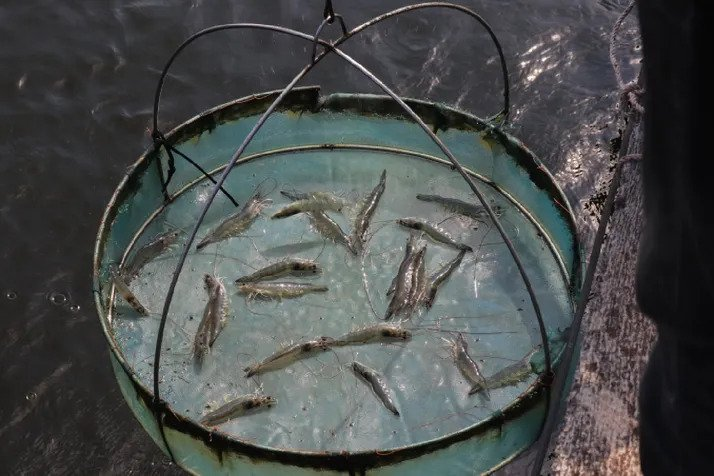
The study investigated the effects of two probiotics, Bacillus\r\ncereus and Pediococcus acidilactici, on the water quality,\r\ngrowth performance, the survival ratio, economic benefits, immunohematology and\r\nbacterial flora in the intestine of white leg shrimp, Litopenaeus vannamei after\r\n110 days.
You can be B. cereus
The study was undertaken in nine 1.2 hectare earthen ponds,\r\nthree of which were used as controls, three of which were treated with P.\r\nacidilactici probiotic (106 CFU/mL) and three of which with B.\r\ncereus probiotic (106 CFU/mL).
The results showed that adding B. cereus and P.\r\nacidilactici to the water pond positively decreased nitrate, ammonia and\r\nbiochemical oxygen demand when compared with the control group (p <\r\n.05).
However, the researchers noted that there were marked\r\ndifferences in the impact made by the two different strains of probiotics.
In terms of growth, treating shrimp with B. cereus caused\r\nsignificantly higher weight gain (16.72 g) and survival ratio (94.50%) in\r\ncomparison with control group (p < .05). As a result the researchers\r\ncalculated that using B. cereus increased shrimp production by 27.30\r\npercent and net income by 92.94 percent compared to the control ponds. As far\r\nas the impact on the immune systems of the shrimp the total hemocyte count\r\n(9.00), total protein (8.92 g/dl) and lysozyme activity (21.55 U/ml) in treated\r\nwhite leg shrimp with B. cereus were “significantly higher” than those\r\nuntreated (p < .05).
Meanwhile, P. acidilactici had a less marked the effect, although they calculated that it could still increase\r\nproduction by a not-insignificant 18.42 percent and net income by 49.29\r\npercent.
The researchers concluded that adding B. cereus (106 CFU/ml)\r\nto earthen ponds is advisable in shrimp farms.
Further information
\r\n\r\n\r\n\r\n\r\n\r\n\r\n\r\n\r\n\r\n\r\n\r\n\r\n\r\n\r\n\r\n\r\n\r\n\r\n\r\n
An abstract of this research, which was published under the\r\ntitle "The effects of water additive Bacillus cereus and Pediococcus\r\nacidilactici on water quality, growth performances, economic benefits,\r\nimmunohematology and bacterial flora of white leg shrimp (Penaeus vannamei Boone,\r\n1931) reared in earthen ponds", in Aquaculture Research, is\r\navailable here.
Source: The Fish Site

Ditulis oleh
Tim Minapoli
Kontributor
Pakar di bidang akuakultur dengan pengalaman lebih dari 15 tahun. Aktif berkontribusi dalam pengembangan industri perikanan Indonesia.