

Chitin-based plastic\r\nalternative maker CuanTec partners with WaitroseFood waste and marine plastic pollution are two of mankind’s\r\nmost pressing concerns . At a time when one in nine people are d...
Chitin-based plastic\r\nalternative maker CuanTec partners with Waitrose
Food waste and marine plastic pollution are two of mankind’s\r\nmost pressing concerns . At a time when one in nine people are deemed to be\r\nmalnourished, the United Nations’ Food and Agriculture Organization (FAO)\r\nestimates that as much as one-third of all the food produced globally is lost\r\nor wasted.
Concurrently, and as universally highlighted by the David\r\nAttenborough documentary series Blue Planet II aired on BBC, some 8 million\r\nmetric tons (MT) of discarded plastics are entering our oceans every year.
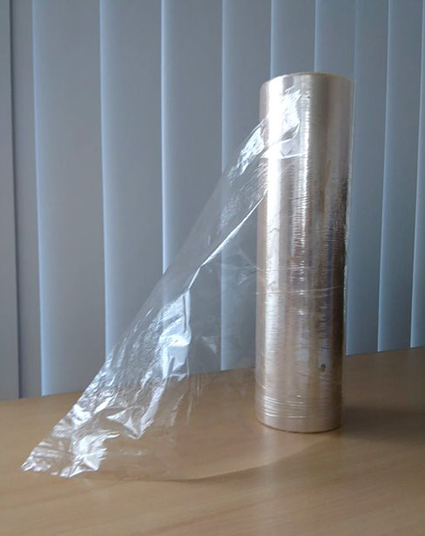
The sheer scale of these two crises are not only\r\nunsustainable, for the majority of us, they’re also very difficult to stomach.\r\nFortunately, the startling statistics have not gone unnoticed by supply chains,\r\nwith a growing number of solutions linked to tackling these issues coming\r\nonstream. One such innovation with the potential to have a positive impact in\r\nboth areas is a new type of chitosan-based bioplastic that offers a much\r\ngreener alternative to those conventional plastic films that can’t be recycled.\r\nIt also offers the significant benefit of adding longer shelf-life to food\r\nproducts.
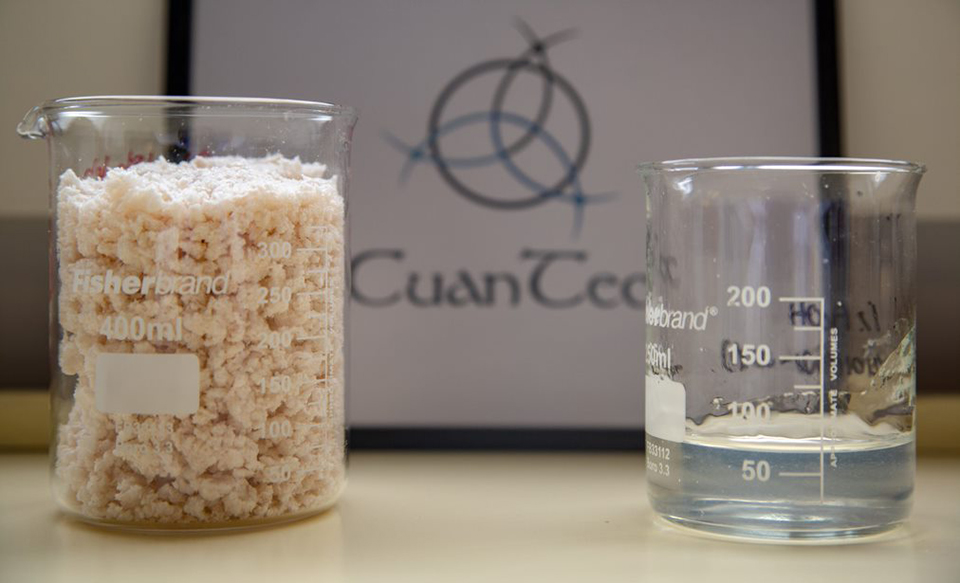
Developed by Scottish biotech company CuanTec, the product,\r\ntrademarked “CuanSave,” is formulated from chitin that has been extracted from\r\nthe shells of shellfish left over after processing – mainly langoustines caught\r\nin Scottish fisheries. It is antimicrobial, with the ability to extend the\r\nshelf-life of fresh fish by up to 40 percent, the company claims.
Therefore, as well as providing a ready-to-go circular\r\neconomy by giving a value to what would have been a waste material while also\r\ntaking single-use plastic out of the food system, it helps protect the food\r\nthat’s on sale and reducing the waste going to landfill.
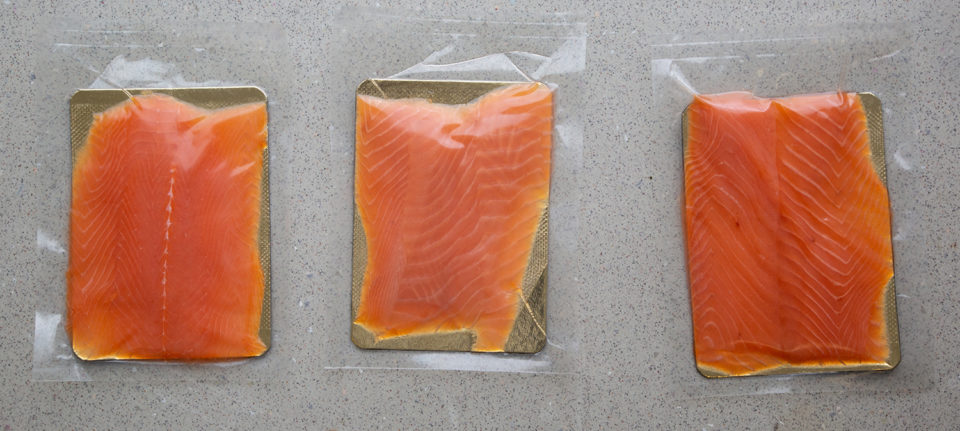
Commercial production of the bioplastic is now just a few\r\nmonths away with the initial focus on farmed salmon products.
Biological focus
While chitin is already widely used around the world by a\r\nvariety of industries in many products, the traditional extraction of this\r\npolymer and its conversion into chitosan tends to involve high energy costs as\r\nwell as the use of harsh chemicals. CuanTec’s solution, however, uses a much\r\ngentler fermentation process that’s more environmentally friendly and\r\ncost-effective, the company told the Advocate.
CuanTec’s Paula Duffy said that to the best of the company’s\r\nknowledge, this process is unique to its operations.
“In time, and with more R&D funding, the hope is to\r\ndevelop a fully biological process that eliminates the use of any chemicals,”\r\nshe added.
CuanTec started operations in 2017 with three researchers at\r\na lab at Biocity, outside Glasgow. It has quickly grown to a team of 14, along\r\nwith an additional lab facility at the European Centre for Marine Biotechnology\r\nin Oban.
In getting to this stage, most of the company’s endeavors\r\nhave focused on the science and finetuning the biological process to bring down\r\ncosts as well as reducing the environmental impact, but Duffy acknowledged that\r\nwhile this has been going on, the interest and demand for the product has\r\nincreased dramatically.
“We’re getting a lot more attention, with lots of people\r\nasking for the product, and that’s a nice challenge to have,” she said. “We’re\r\ngetting there. We are close; we’re hoping to be in production at the start of\r\nnext year.”
To help CuanTec progress to pilot production scale and\r\nfinalize its formulations, the company recently secured funding from Sky Ocean\r\nVentures and Scottish Enterprise. This was through an investment round geared\r\ntowards accelerating ideas that can deliver sustainable solutions to single-use\r\nplastics.
Retail engagement
Retail group John Lewis & Partners, which owns the\r\ngrocery chain Waitrose, is also on board with the solution. This engagement\r\ncame after the idea was presented to John Lewis during a pitch day to reduce\r\nplastic waste, part of its JLAB retail innovation program.
At the end of 2018, Waitrose, which is committed to making\r\nall of its own-label packaging recyclable, reusable or home compostable by\r\n2023, entered into a partnership with CuanTec to test the packaging on its food\r\nproducts, with a view to introducing it to some of its fish.
“They are hoping that the first products will be on shelves\r\nby 2021, starting with smoked salmon,” said Duffy.
CuanTec is also receiving raw materials from the Lincoln,\r\nUK-based fresh shrimp producer FloGro.
“They are sending us their prawn shells and we are\r\ndeveloping some packaging that they can use from those shells,” said Duffy. “It\r\nwill be a circular economy, which is quite an important part of their\r\nstrategy.”
Similarly, it’s developing packaging for Welsh fishmonger\r\nThe Fabulous Fish Company.
“We’ve had a lot of interest from the salmon and aquaculture\r\nsectors, but it’s not just food manufacturers that are interested. Dairy\r\nfarmers have been asking of the possibility to produce bottles, and beer\r\ncompanies looking for alternatives to the connected plastic rings (yokes) have\r\nbeen in touch. There have also been enquiries about its use as a wrapping for\r\npallets rather than the shrink wrap that’s currently used,” said Duffy. “Our\r\ncompany was established before Blue Planet II aired, but since then the\r\ninterest in us has just been crazy.”
While CuanTec hopes to eventually be in a position to\r\ndevelop plant-based products, potentially using chitosan extracted from\r\nmushrooms, the immediate focus will remain on fresh fish. It would also like to\r\nopen new lab facilities so that it can produce chitin and chitosan globally\r\nclose to fishing villages.
\r\n\r\n\r\n\r\n\r\n\r\n\r\n\r\n\r\n\r\n\r\n\r\n\r\n\r\n\r\n\r\n\r\n\r\n\r\n\r\n\r\n\r\n\r\n\r\n\r\n\r\n\r\n\r\n\r\n\r\n\r\n\r\n\r\n\r\n\r\n\r\n\r\n\r\n\r\n\r\n\r\n\r\n\r\n\r\n\r\n\r\n\r\n\r\n
“Plastic is very much at the forefront of everyone’s mind.\r\nIt has its place, but not the way that we are using it at the moment. There’s a\r\nrealization that we need to replace single use plastic with something that’s\r\nfully compostable and which isn’t going to have the environmental impact of\r\nstandard PET packaging,” said Duffy.
Source : Global Aquaculture Alliance

Ditulis oleh
Tim Minapoli
Kontributor
Pakar di bidang akuakultur dengan pengalaman lebih dari 15 tahun. Aktif berkontribusi dalam pengembangan industri perikanan Indonesia.