

Shrimp do not have a specific immune system, the shrimp\'s\r\nimmune system is mainly based on the natural immune system including physical\r\nbarrier (tin shell), humoral immunity, and cellular immun...
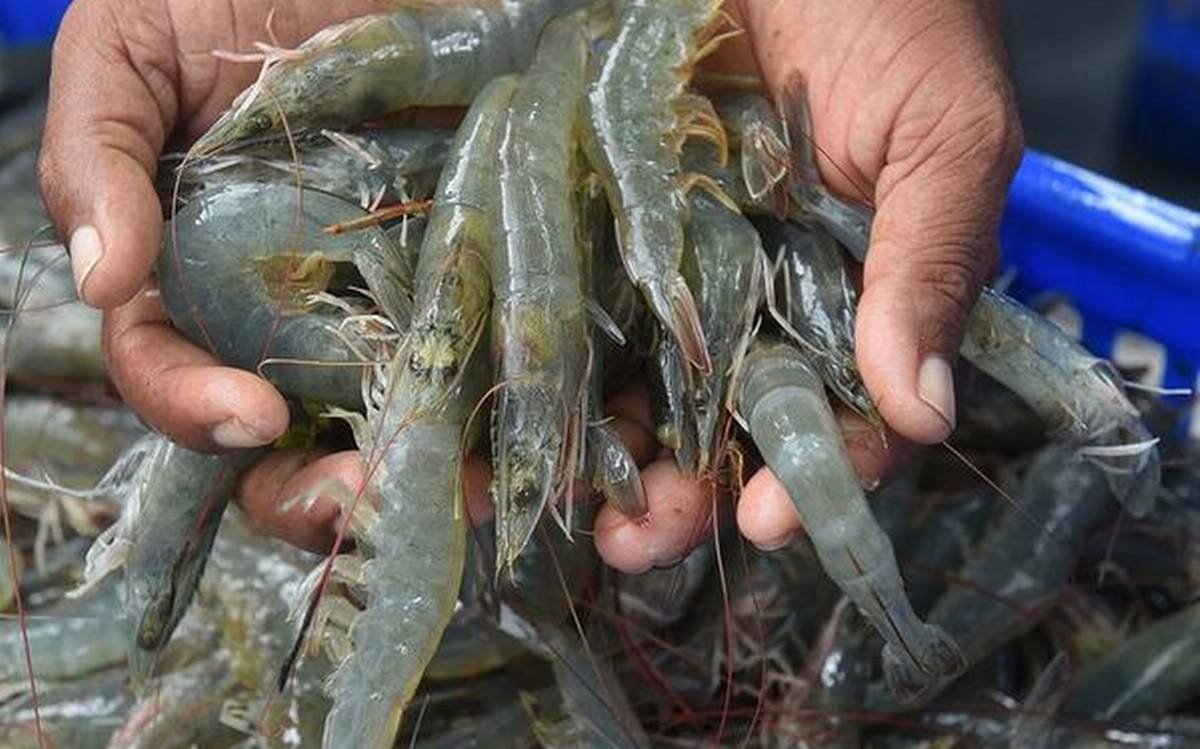
Shrimp do not have a specific immune system, the shrimp's\r\nimmune system is mainly based on the natural immune system including physical\r\nbarrier (tin shell), humoral immunity, and cellular immunity in it. White blood\r\ncells play a very important role in fighting germs.
Lysozyme, also known as muramidase or N-acetylmuramide\r\nglycanhydrolase, is an antibacterial enzyme produced by animals and helps form\r\npart of the innate immune system. Lysozyme is present in saliva, tears,\r\nmilk ... In industry, the supply of lysozyme is mainly from egg\r\nwhites. Lysozyme is an antibacterial, specialized in attacking bacterial\r\ncell walls and weakening them. In addition lysozyme also works on some\r\ngram (-) bacteria and some viruses.
Lysozyme has antibacterial activity through the conversion\r\nof insoluble polysaccarids into gram (+) bacterial cells into soluble\r\nmucopeptides, thereby breaking down the cell walls and destroying\r\nbacteria. Several lysozyme studies in animals show that supplementing with\r\nlysozyme helps improve feed efficiency, growth and immune\r\nstimulation. However, research on lysozyme in aquatic animals is limited,\r\nso Javahery et al., 2019 study will add lysozyme to whiteleg shrimp feed to\r\nimprove digestion, stimulate growth and increase. immune.
The feeding method is considered a practical method, easy to\r\nimplement on a large scale, not shocking for shrimp and can add lysozyme at any\r\nstage of shrimp development in shrimp immune enhancement therapy.
Study on adding lysozyme to whiteleg shrimp feed
The experiment consisted of four treatments with lysozyme\r\nsupplementation at the following concentrations: 0 (control), 0.5, 1 and 2 g /\r\nkg over 4 months. Results indicated that adding lysozyme to feed improved\r\ngrowth, decreased FCR, and increased feed utilization compared to control (P ˂\r\n0.05).
In addition, the addition of lysozyme has effects on the\r\nshrimp immune system including increased antioxidant capacity, superoxide\r\neffutase, glutathione peroxidase, lysozyme, alkaline phosphatase, and\r\nphenoloxidase compared to the control group.
Moreover, the digestive enzymes (lipase, protease and\r\namylase) in shrimp supplemented with lysozyme were significantly higher (P ˂\r\n0.05) than in the control treatment, stimulating shrimp to catch more prey from\r\nwhich stimulated like growth.
The results from the study provide more practical\r\ninformation, suggest the addition of lysozyme to shrimp feed to improve immune\r\nresponse as well as modulate the activity of digestive enzymes to stimulate\r\nshrimp growth.
\r\n\r\n\r\n\r\n\r\n\r\n\r\n\r\n\r\n\r\n\r\n\r\n\r\n\r\n\r\n\r\n\r\n\r\n
In addition, to raise shrimp effectively, people need to\r\nclosely manage the water environment, leftovers, periodically treat ponds,\r\nmonitor shrimp daily, supplement digestive enzymes, vitamin C to ensure shrimp\r\ngood growth and development.
Source : tepbac

Ditulis oleh
Tim Minapoli
Kontributor
Pakar di bidang akuakultur dengan pengalaman lebih dari 15 tahun. Aktif berkontribusi dalam pengembangan industri perikanan Indonesia.