

The need to halt the decline of yield per fry was the central theme of a presentation on Mediterranean finfish hatcheries which was\r\ngiven by Isabel Represas at INVE’s customer seminar in Crete.\r\n...
The need to halt the decline of yield per fry was the central theme of a presentation on Mediterranean finfish hatcheries which was\r\ngiven by Isabel Represas at INVE’s customer seminar in Crete.
\r\n\r\nRepresas, who is INVE Aquaculture’s sales director\r\nin Europe and the Middle East (EMEA), kicked off proceedings by asking the\r\naudience – who were primarily seabass and seabream hatchery managers – a\r\nnumber of questions.
\r\n\r\nThe first question (see figure 1 below) related to the\r\nfactors that producers see as being the most important for improving their\r\noverall production. The results showed that 39 percent of the audience believed\r\nthat improvements in hatchery protocols will have the biggest impact on the\r\npredictability of the production while 27 percent put their faith in new\r\ntechnologies. The consistency of products came in as the third-largest area for\r\nimprovement with 19 percent of the vote, while increasing staff skill picked up\r\nthe remaining 15 percent.
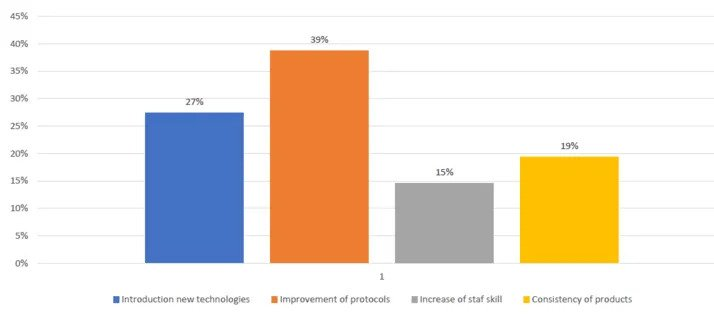
Figure 1: hatchery managers were asked to share the factors\r\nthey considered having the greatest impact on their productivity
\r\n\r\nThe second question (figure 2) related to profitability,\r\nwith 29 percent rating genetics as the most important means to improve\r\nprofitability and 26 percent thinking that biosecurity was the number one\r\npriority. Eighteen percent rated automation as having the most potential to\r\nimprove profitability and this was followed by nutrition (15 percent) and\r\ndiversification (12 percent).
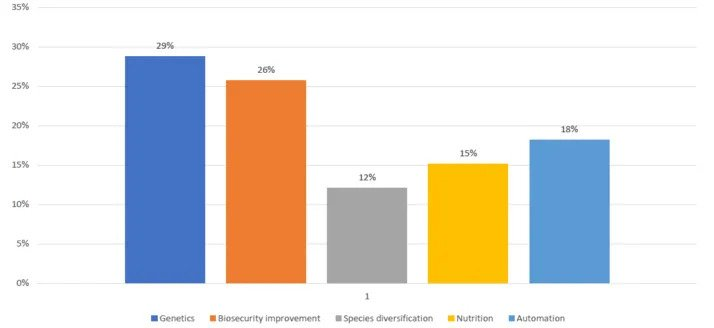
Figure 2: hatchery managers were asked to share the factors\r\nthey considered having the greatest impact on their profitability
\r\n\r\nCommenting on the results of the online poll, Represas said:\r\n“ The results clearly showed that predictability and profitability are linked\r\nwith more than one factor, we have to look into several aspects as genetics and\r\nbiosecurity, aligned with hatchery protocols to improve larval quality as one\r\nof main drivers for successful fish farming. New technologies and automation\r\nare crucial to reducing risk factor, this is expected to grow rapidly as\r\nconsolidation of the industry continues.”
\r\n\r\nRepresas went on to provide an overview of aquaculture\r\nproduction levels in the Mediterranean, revealing that 440,000 tonnes of\r\nfinfish (of which 95 percent was accounted for by bass and bream) were produced\r\nin 2018. Moreover, although these fish were produced across 20 countries, Greece\r\nand Turkey account for 70 percent of production levels. She also flagged up the\r\ntrends over the last 20 years, in which fry production has increased 2.8 times,\r\nwhile grow-out numbers have only increased by 2.5 percent.
\r\n\r\nEstablishing the yield per fry – which is one of the best\r\nmeasures of production efficiency – Represas explained, was not easy, but it is\r\nclear from the data that she was able to collate that while it is hugely\r\nvariable from year to year, there is also a clear long-term downward trend.
\r\n\r\nMeanwhile, in terms of species, she noted that, while the bass\r\ntraditionally had a better yield per fry in the last two years they have been\r\noutperformed by bream.
\r\n\r\nShe went on to contrast the performance in the Mediterranean\r\nwith that of the salmon sector, which has seen a gradual increase in yield per\r\nsmolt over the generations and was now at 3.52 kg/smolt in Norway. - an\r\nimportant indicator of improved production efficiency. However, she also noted\r\nthat in other countries, such as Chile, there has been a high variability from\r\nyear to year – a reflection of sporadic spikes in disease levels.
\r\n\r\nThe good news, according to Represas, is the decrease in the\r\ncost of fry production in the Med, due to the optimization of hatchery\r\nprocedures, with the current average cost of producing 1 million fries now at\r\naround €119,584 (ie €0.12 per fry). However, she finished up her presentation\r\nby suggesting that optimizing feeding protocols – particularly at the nursery\r\nstage – could have a major impact on improving overall performance.
\r\n\r\nAnd she presented the results of a trial which suggest that\r\nupgrading feeds in a farm with a 5,000-tonne production capacity could increase\r\nthe end yield by 736 tonnes and overall income by €2.4 million.
\r\n\r\nSumming up her talk Represas emphasized: “The vital role of\r\nfry quality in maximizing yields during grow-out. As a result, it’s of crucial\r\nimportance for hatchery managers to prepare their fish to ensure healthy,\r\nwell-balanced and cost-effective growth.”
\r\n\r\nIn order to achieve this, she argued, producers need to:\r\n“Improve their technology; increase levels of automation to reduce human error\r\nand increase control and predictability, and implement new techniques to manage\r\nenvironmental conditions and disease prevention”.
Source: The Fish Site
\r\n\r\n

Ditulis oleh
Tim Minapoli
Kontributor
Pakar di bidang akuakultur dengan pengalaman lebih dari 15 tahun. Aktif berkontribusi dalam pengembangan industri perikanan Indonesia.