

Wealthy city-state Singapore is becoming a hub for\r\naquaculture and food innovation investment, backed by a government keen to lift\r\nits food self-sufficiency.Companies such as Singapore-based Bar...
Wealthy city-state Singapore is becoming a hub for\r\naquaculture and food innovation investment, backed by a government keen to lift\r\nits food self-sufficiency.
Companies such as Singapore-based Barramundi Asia and Blue\r\nAqua International Group are getting government support to build farms as the\r\nstate strives to make itself 30% self-sufficient in food. The country also aims\r\nto become a global research hub for the aquaculture industry, as part of a\r\nbroader plan to become a hub for food innovation.
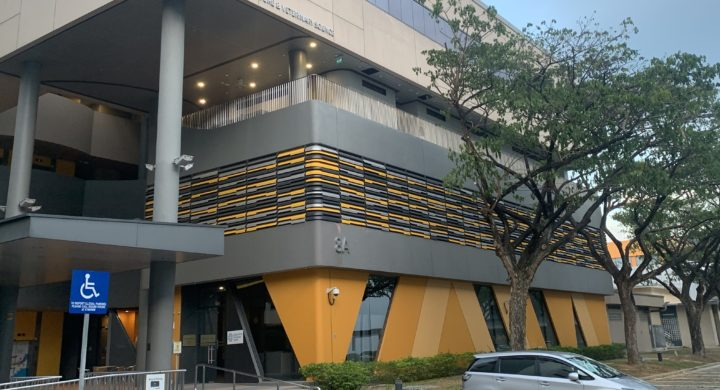
“In Singapore, we look very closely into this area of food\r\nsecurity,” Matthew Tan, CEO of Singapore seafood company Oceanus Tech,\r\ntold Undercurrent News. “The government is putting a lot of resources to encourage this.”
Singapore is competing with other cities such as Tokyo,\r\nJapan and St. Louis in the US to become the hub for the hot agtech movement,\r\nwhich is attracting billions of dollars in investment capital to disrupt food\r\nsupply chains. Singapore, with its capital and technological capability, could\r\nbe a shining light for the farming of tropical marine species and bridge the gap between the high-tech salmon industry and others.
Besides direct government support, there are more than 20\r\nstate agencies that provide support to start-ups in seafood and other\r\nassociated sectors. One of the most active of those is Enterprise Singapore,\r\nthe state promotion agency that is seeking to help food innovation through its\r\nFoodInnovate scheme.
Temasek, Singapore’s sovereign wealth fund with SGD 313\r\nbillion ($231bn) in assets, has a keen eye on the aquaculture sector and has\r\nbuilt an aquaculture innovation center at its state-of-the-art Temasek\r\nUniversity.
The government also built Innovate 365, a facility with wet\r\nlabs and kitchen space designed for food start-ups. Shiok Meats, which is\r\naiming to bring lab-grown shrimp to the market within two years, recently\r\nlocated there.
The agtech industry is the last trillion-dollar industry on\r\nEarth which has yet to be disrupted by digitalization said The Yield Lab,\r\nwhich will run an aquaculture innovation challenge in 2020.
Singapore has become one of the wealthiest countries in the\r\nworld, after separating from Malaysia in 1965. The city-state was a significant\r\ntrading post in the British Empire and is already one of the largest trade hubs\r\nfor both agricultural commodities and oil.
Blue Aqua to become the biggest producer
Singapore, which has a population of 5.6 million, imports\r\nabout 120,000 metric tons of seafood every year.
Singapore-based Blue Aqua International -- an active player\r\nin selling feed additives including probiotics, and an owner of shrimp farms\r\nacross Southeast Asia -- is investing in Singaporean farms with strong\r\ngovernment support. It started a shrimp farm there and is the first company to\r\ngrow Florida pompano in the state.
“If everything goes well, we will be the largest seafood\r\nproducer in Singapore,” Blue Aqua CEO Farshad Shishehchian told Undercurrent.\r\n“In Singapore, we don’t have land and we don’t have many resources. It looks\r\nmore like a stretch goal for us. But we have absolutely support from the\r\ngovernment, and support from the agencies.”
It is still a challenge to farm in Singapore, despite\r\ngovernment backing. Aquaculture still faces environmental opposition as it does\r\nin other parts of the world, Shishehchian said. Energy and manpower costs are\r\nhigh, he said. That’s why most seafood was being imported from neighboring\r\nMalaysia, he said.
One other company that is emerging as a significant player\r\nin tropical marine species is Barramundi Asia, which has plans to become the\r\nworld’s largest farmer of this tropical species. The company has farming sites\r\nin Singapore, Brunei, and Australia, and is starting to build a recirculating\r\naquaculture system hatchery at its farms in Singapore.
Barramundi Asia recently received an investment from\r\npublicly-traded Oceanus Group to advance the start-up's international\r\nexpansion. Oceanus Group already has a sizeable business breeding abalone in\r\nChina.
“Barramundi is a growing market, I see a good market in the\r\nfillet,” said Tan, who runs the technology side of Oceanus Group. “In\r\naquaculture economies of scale are important, and it’s a relatively easy fish\r\nto spawn and grow.”
Barramundi also is good fish for the modern Asian consumer,\r\nwho is likely to purchase a barramundi fillet in vacuum packaging and can stir\r\nfry or steam the fish, Tan said.
Food Security
Singapore is playing a key role in ensuring food security\r\nfor the Asian region, not least through its co-chairing of the Asia-Pacific\r\nEconomic Cooperation’s Policy Partnership on Food Security (PPFS), which was\r\ncreated in 2011 in response to the threat of rising food prices and periods of\r\nprice volatility.
In practice, Singapore is partnering with neighboring\r\ncountries and seeking to encourage collaboration with the private sector to\r\nspur investment in food innovation said Tan, who also participates in the PPFS\r\nmeetings.
“The thinking was 'let’s not compete',” Tan said. “Let’s put\r\nall our resources together into a common technology, matching technology and\r\nneeds. Singapore has technology."
Asia as a region will likely spend $8 trillion on food a\r\nyear by 2030, from $4 trillion in 2019, according to a joint report by Temasek,\r\nRabobank and consultancy firm PricewaterhouseCoopers. Asia’s rapidly emerging\r\nmiddle class will change the “shape and composition” of the food basket, the report\r\nauthors concluded.
\r\n\r\n\r\n\r\n\r\n\r\n\r\n\r\n\r\n\r\n\r\n\r\n\r\n\r\n\r\n\r\n\r\n\r\n\r\n\r\n\r\n\r\n\r\n\r\n\r\n\r\n\r\n\r\n\r\n\r\n\r\n\r\n\r\n\r\n\r\n\r\n\r\n\r\n\r\n\r\n\r\n\r\n\r\n\r\n\r\n\r\n
Singapore, besides aquaculture, is looking to specialize in\r\nurban aquaculture. One firm, Sky Greens, signed an agreement with the country's\r\nAgri-Food and Veterinary Authority to build so-called vegetable towers that sit\r\nat the top of residential blocks and provide locally-sourced vegetables.
Source: Undercurrent News

Ditulis oleh
Tim Minapoli
Kontributor
Pakar di bidang akuakultur dengan pengalaman lebih dari 15 tahun. Aktif berkontribusi dalam pengembangan industri perikanan Indonesia.