

Corbion and KnipBio each secured positive developments\r\nrecently in the advancement of the development and marketing of their\r\nalternative aquafeed ingredients.Gorinchem, The Netherlands-based Cor...
Corbion and KnipBio each secured positive developments\r\nrecently in the advancement of the development and marketing of their\r\nalternative aquafeed ingredients.
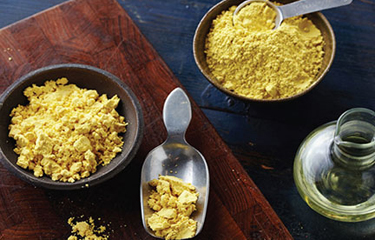
Gorinchem, The Netherlands-based Corbion recently scored a\r\ncontract to sell its AlgaPrime DHA, which is an algae-based source of\r\nlong-chain omega-3s, to the Bergen, Norway-based Salmon Group, which represents\r\n44 fish farmers collectively producing 12 percent of the total salmon raised in\r\nthe Scandinavian country. The product will be supplied to Salmon Group via a\r\ncustom feed supplied by BioMar, which Corbion has previously partnered with on\r\nfeed contracts with Lerøy Seafood’s Aurora Salmon, Silverside Coho Salmon from\r\nVentisqueros, and Blue Circle Salmon. AlgaPrime DHA is now a component in more\r\nthan 500,000 tons of feed sold by BioMar in Norway.
“The leadership shown by Salmon Group is impressive\r\nand we are thrilled to play a part in improving sustainable aquaculture across\r\nthe globe,” Corbion Executive Vice President of Innovation Platforms Marc den\r\nHartog said in a press release. “AlgaPrime DHA continues to be adopted and trusted\r\nby salmon farmers as they look to improve the omega-3 content and\r\nsustainability profile of their salmon."
Salmon Group has a goal of “reducing the overall\r\nenvironmental footprint of feed while maintaining feed quality, feed\r\nperformance, and fish welfare,” according to Salmon Group CEO Anne-Kristine\r\nØen.
“Salmon Group has been working systematically for several\r\nyears to ensure more sustainable farming practices, and feed is a key element\r\nhere,” Øen said. “Through BioMar’s innovation efforts, they have identified and\r\nsourced alternative ingredients, like AlgaPrime™ DHA, that help put our\r\nsustainability goals into practice, and meet retail and consumer demand for\r\nmore responsibly raised seafood.”
Salmon Group’s first farmed salmon fed on the new recipe are\r\nexpected to reach the market by the end of 2019, Øen said.
Last week, Lowell, Massachusetts, U.S.A.-based KnipBio\r\nannounced the European Patent Office approved its use of methylotrophic\r\nbacteria to produce single-cell proteins for animal feeds. The company uses the\r\nprocess in creating its “Knipbio Meal” product, which combines immunonutrients\r\nwith single-cell protein in order to create sustainable feedstocks for\r\naquaculture.
“The technology development and patent protection process\r\nstarted several years ago and are pleased to have achieved these results,”\r\nKnipBio CEO Larry Feinberg said in a press release. “This award, coupled with\r\nour GRAS designation from the US Food and Drug Administration earlier this\r\nyear, validates the emergence of viable alternative proteins to serve animal\r\nnutrition industries including alternative proteins for aquaculture.”
Feinber said the patented process allows KnipBio to create\r\nsingle-cell proteins with an amino acid profile similar to fishmeal, while also\r\nadding in other functional molecules such as prebiotics and carotenoids “that\r\noffer important benefits in aquafeed diets.”
\r\n\r\n\r\n\r\n\r\n\r\n\r\n\r\n\r\n\r\n\r\n\r\n\r\n\r\n\r\n\r\n\r\n\r\n
“For the past five years, we have been developing our\r\nPROTEINplus product platform around the technology covered by this patent and\r\nare gratified that the patent office recognizes the uniqueness and importance\r\nof this work,” Feinberg said. “Single-cell protein made from methylotrophs\r\noffer an outstanding option for meeting the protein needs of the aquaculture\r\nindustry in the coming decades. The manufacturing process is highly scalable\r\nand the single-cell protein produced is traceable, an increasingly important\r\nbenefit for the industry.”
Source : SeafoodSource

Ditulis oleh
Tim Minapoli
Kontributor
Pakar di bidang akuakultur dengan pengalaman lebih dari 15 tahun. Aktif berkontribusi dalam pengembangan industri perikanan Indonesia.