

What inspired you to\r\nbecome involved in shrimp genetics?I’m a medical doctor by training, but I’ve always preferred\r\nresearch over the clinical practice. I was trained in immunogenetics in Boston...
What inspired you to\r\nbecome involved in shrimp genetics?
I’m a medical doctor by training, but I’ve always preferred\r\nresearch over the clinical practice. I was trained in immunogenetics in Boston,\r\nwhere I worked on projects that included designing new methods for\r\nhistocompatibility testing in bone marrow transplantation. When I got back to\r\nColombia, I joined CorpoGen, a biotechnology company that was pioneering\r\nmolecular biology research in Colombia. Getting into the world of shrimp was an\r\naccident – inspired by the appearance of white spot syndrome virus (WSSV) on\r\nthe Pacific coast of Colombia in 1999. At the time CENIACUA (The Center for\r\nAquaculture Research in Colombia) asked Corpogen to implement the PCR\r\ndiagnostic test for the pathogen and to help in the prevention and control of\r\nthis virus. I was involved from the beginning and found a new, exciting field\r\nwith an excellent team of young researchers. I was hired as scientific director\r\nof CENIACUA in 2000 and since then I have been researching shrimp diseases and\r\ngenetics.
What impact did\r\nbecoming part of Benchmark have on your shrimp breeding programs?
Becoming part of a big company that, from the beginning,\r\nbelieved in the potential of our shrimp was exciting. As CENIACUA we were\r\nmainly focused on achieving the breeding goals but did not have the resources\r\nto commercialize the product. As part of Benchmark we are focused on producing\r\nthe best animals for the market conditions, using state-of-the-art technology\r\nand facilities, and on selling them to our customers, all within the scope of\r\nsustainability.
Being part of the Benchmark also means we can count on the\r\nsupport and collaboration of other parts of the group, such as Morten Rye and\r\nhis team at Akvaforsk Genetics; Oscar Hennig, Bruno Decock and the team in\r\nAsia, who are doing an incredible job of showing the potential of our animals\r\nunder trials and commercial conditions; and working with INVE to create a synergy between genetics and nutrition that will help both companies. Learning\r\nfrom the experience of other breeding programs has enriched ours enormously\r\ntoo.
I’m also proud to be working with one of the best teams you\r\ncan find – we’ve been working together for many years and have people with\r\nexperience in all fields of shrimp breeding. We are a multi-disciplinary team\r\nwith experience in plant breeding, veterinary and human medicine, biology and\r\ngenetics, which is important when dealing with shrimp – they always like to\r\nhave the last word and the last laugh.
What facilities do\r\nyou have at your disposal?
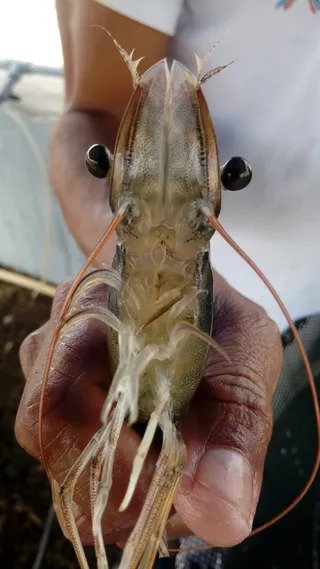
Our main laboratory is located on the Atlantic coast of\r\nColombia, near Cartagena, and is isolated from all the country's other\r\naquaculture facilities. The climate is optimal for the growth of P.\r\nvannamei, and we have plenty of space to expand and produce the number of\r\nbroodstock required by the market. We also have access to a laboratory on the\r\nPacific coast of Colombia where we can work with a white spot-resistant strain\r\nwithout compromising the biosecurity of the breeding nucleus. Meanwhile, our\r\nchallenge test facilities are located in Bogotá, more than a 1000 km from the\r\nbreeding nucleus, allowing us to safely work with pathogens that are exotic to\r\nColombia.
What areas are you\r\ncurrently focusing your research on?
We are currently introducing genomic selection for\r\nresistance to white spot syndrome virus (WSSV) and acute hepatopancreatic\r\nnecrosis disease (AHPND) in our populations. Our priority is to produce clean,\r\nsafe, specific pathogen-free (SPF) animals with high growth potential, but\r\nthese must also be resistant to pathogens and environmental conditions.
What achievements are\r\nyou most proud of in the shrimp field to date?
We’re very proud of having been able to keep the breeding\r\nprogram going during very hard times. In terms of academic achievements, we\r\ndescribed the effect of hyperthermia in WSSV infection, we showed that\r\napoptosis is part of the antiviral shrimp response, we identified the negative\r\ncorrelation between growth and WSSV resistance in P. vannamei and we have\r\nbeen able to produce robust shrimp with high growth potential.
Is the commercial\r\nshrimp sector increasingly interested in the power of genetics?
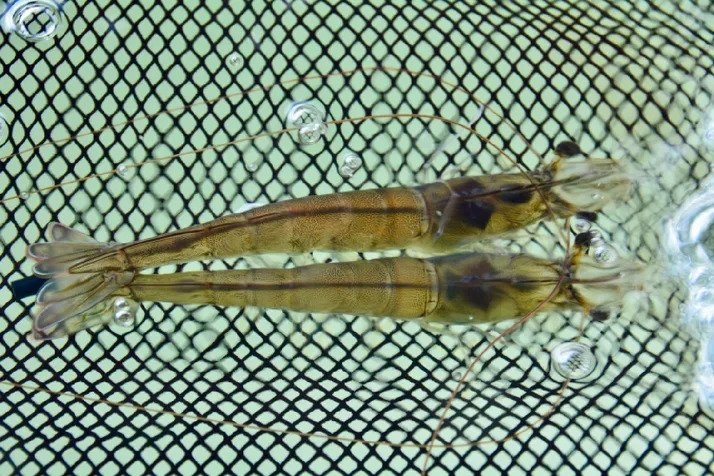
Yes, although selective shrimp breeding is relatively recent\r\ncompared to in species such as salmon, the market for broodstock has been\r\nsteadily growing. The most reliable data on the export of genetically\r\nimproved P. vannamei broodstock comes from Hawaii, home to some\r\nof the main breeding programs in the US. It shows that from 2003 to 2015,\r\nthe numbers of broodstock increased from nearly 100,000 in 2003 to 800,000 in\r\n2015. In 2017 the export value was nearly US$30 million. There are also several\r\nbreeding programs in Asia that are growing year by year
What are the key\r\ntraits sought by shrimp producers – both in your region and globally?
The main trait targeted by shrimp producers in all regions\r\nis growth – we all need an animal that grows fast. In Latin America, the\r\nwidespread use of large earthen ponds means that robustness is also a priority.\r\nIn recent years, after several outbreaks of disease, Asia has also been looking\r\nfor animals with high survival, making it a very interesting market for our\r\nSPF/SPR animals. The key lesson here is that one size does not fit all – not\r\nall broodstock are optimal for all conditions. In Punta Canoa, we are developing\r\ndifferent lines – for example, early growth, low salinity, and WSSV-resistant –\r\nthat can be distributed to different environments and culture conditions.
Can you explain the\r\ndifference between SPR, SPF, SPT and APE shrimp?
Let’s start by classifying the four terms into two different\r\ngroups: a) SPF and APE and b) SPR and SPT.
The first group is based on the sanitary status of the\r\nbreeders. Specific pathogen-free (SPF) animals are those that have been tested\r\nand determined to be free of designated pathogens. Under the guidelines\r\nestablished by USMFSP, SPF shrimp stocks must come from a population that has\r\ntested negative for specific pathogens for at least 24 months and must be\r\nraised in highly biosecure facilities, following biosecure management measures,\r\nwith a suitable surveillance program in place that uses both molecular and histopathological\r\ntools. The key term here is “specific” – SPF does not mean they are free from\r\nall pathogens, so the relevant pathogens should always be listed. On the other\r\nhand, APE (all pathogens exposed) is a term used to describe animals that have been\r\nraised in ponds or tanks where they have been exposed to one or more pathogens\r\n– either via challenge tests or under culture conditions. The term is\r\nmisleading because the animals will never be exposed to all pathogens, but is\r\nthe term used at the moment. Those animals can be carriers of the pathogens and\r\nare a risk for transboundary movements.
The second group of terms, specific pathogen resistant (SPR)\r\nand specific pathogen tolerant (SPT), refers to the way the shrimp deals with the\r\npathogens. Resistance is defined as the ability to limit parasite burden, in\r\nother words, to fight the enemy. Tolerance, on the other hand, is the ability to\r\nlimit the damage caused by a given parasite burden – in other words, to live\r\nwith the enemy. They are two different types of defense against pathogens\r\npresent in plants, invertebrates, and vertebrates, and both mechanisms can even\r\nbe negatively correlated. In shrimp literature, there is a misconception that\r\nresistance is a qualitative trait and animals are either resistant or susceptible,\r\nwhile tolerance is a quantitative trait with different degrees of tolerance\r\nthat can be affected by the environment. In reality, both traits are\r\nqualitative, and both can be affected by the environment. It is very difficult\r\ntherefore to say if a given line is resistant or tolerant and the market is\r\nusing the term SPR/SPT. As for SPFs, if a line is marketed as SPR or SPT it\r\nshould list the pathogen(s), they are resistant or tolerant against.
What are the main\r\nchallenges the shrimp sector needs to overcome and which of these would you\r\nmost like to have a role in solving?
\r\n\r\n\r\n\r\n\r\n\r\n\r\n\r\n\r\n\r\n\r\n\r\n\r\n\r\n\r\n\r\n\r\n\r\n\r\n\r\n\r\n\r\n\r\n\r\n\r\n\r\n\r\n\r\n\r\n\r\n\r\n\r\n\r\n\r\n\r\n\r\n\r\n\r\n\r\n\r\n\r\n\r\n
The main challenge for us is to produce a fast-growing\r\nshrimp that is not only resistant to pathogens but is also resilient under\r\ncommercial culture conditions. Growth in shrimp has a very good heritability\r\nand is very easy to select for. However, the negative correlation of these\r\ntraits with resistance to some pathogens, such as WSSV, and with environmental\r\nconditions, such as low oxygen levels, makes our work more interesting and\r\nchallenging. It’s a question of how to increase growth rates without increasing\r\nmortality levels.
Source: The Fish Site

Ditulis oleh
Tim Minapoli
Kontributor
Pakar di bidang akuakultur dengan pengalaman lebih dari 15 tahun. Aktif berkontribusi dalam pengembangan industri perikanan Indonesia.